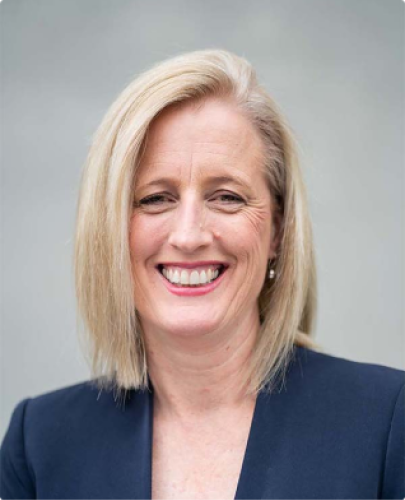
TV Interview - ABC News Breakfast
SENATOR THE HON KATY GALLAGHER
Minister for Finance
Minister for Women
Minister for the Public Service
Minister for Government Services
Senator for the ACT
JAMES GLENDAY, HOST: Let's get more on our top story and yesterday's interest rate rise. The Finance Minister is Katy Gallagher and she joins us now. Minister, welcome back to the show.
KATY GALLAGHER, MINISTER FOR FINANCE: Good morning.
GLENDAY: I asked Angus Taylor this same question earlier this morning. What's your message to families with mortgages or small businesses this morning with loans who are waking up thinking about what they're going to have to cut ahead of Christmas?
GALLAGHER: I think I would say these are really difficult economic times, very challenging, and we know that it's hitting households and businesses really hard. And that the Government is going to do whatever it can to make things as easy as possible as we go through and travel through this higher inflation period. But there isn’t an easy message, James. It is very difficult and we understand that. We've got a job to do and we, you know, get to our desk every day and make decisions in the best interests of the country and we're doing that right now.
GLENDAY: I might come to that in a moment. I'm curious as to your view on this decision. This was a split decision. Three out of nine members of the RBA board did not want to do this. So do you think it was the right call?
GALLAGHER: Well, I'm not going to get into whether or not it was the right call. The Bank's independent. It has a job to do. I don’t speculate about the decisions they make and I don't think it's particularly useful for the Finance Minister to then weigh in with a personal opinion. What I think, you know, they've got a difficult job to do as well, particularly when inflation is higher than any of us would like. But our job, and my job and that of my colleagues is to make sure that the decisions we make are helping the fight against inflation and that's what we are focused on.
GLENDAY: As the ticker on the bottom of our screen just said, minister, the RBA Governor says this is going to feel like a recession. Is there a risk now of a 1990s-style recession? Is that risk growing?
GALLAGHER: I saw the Governor's comments yesterday and she was saying that was not included in their forecasts or words to that effect, and Treasury will update its forecasts in the Mid-Year Economic and Fiscal Outlook, but those set of numbers, I think all the economists and other commentators look at closely, I think the reality for people managing household budgets and working out how to put petrol in the car and things like that, whether a number changes is immaterial to actually what it feels like for those households, so I think our focus has to be on the decisions we make, making sure that our decisions contribute positively to the fight against inflation and we have to work through this time and it is very, very challenging. I'm not pretending otherwise.
GLENDAY: I want to jump in there. I feel like you're pretty clearly indicating again this morning that you're going to look at savings ahead of Christmas to try to help cool demand. Can you give us more detail about what you're looking at? Is it public service job cuts? Is it a reduction in welfare spending that would make a quick difference?
GALLAGHER: I think it's important to acknowledge that in the forecast the Bank released yesterday, that the level of public demand was revised back, so acknowledging that some of the savings that we've made, we are seeing that flow through into the economy. Where we're seeing pressure is in private demand, so investment in data centres and things like that.
GLENDAY: Sorry to jump in, but I think you would probably concede that you're going to be copping some of the political blame. Many of your colleagues want the Government to tighten its belt now. Can you give us an indication of where you're going to be looking?
GALLAGHER: Yeah, but the point I'm making, James, is that we have been doing that. I know people want to brush over that and say, yeah, that's all been banked and we move on and do more, but there should be some acknowledgement that we have made those savings and that has been seen in the data coming through and we have more to do as the Treasurer and I have said and, you know, we are looking across the board. We're in those meetings now. We're settling MYEFO in the course of the next three weeks or so, so all of those decisions will be considered, but we are looking across the board. I would say at the same time, and I think the PM has made this point, you get a lot of free advice around cutting government spending, but there are also two points here. One - not so much detail on where and how, including the fact we have $10 billion of savings stuck in the Parliament that the Parliament refuses to pass, and so the Opposition has some questions there. But also, that the reality is that the Budget needs to look after people. It needs to invest in Medicare and aged care and disability services and social security and pensions and payments, as you say. And so, our decisions have to balance up all of those pressures, the pressures coming at the Budget, how we can find savings and how we contribute into I guess dealing with the inflation challenge in the economy.
GLENDAY:Should we infer from those comments that government payments, things like pensions, things like aged care support, childcare, NDIS perhaps, are not going to be targeted?
GALLAGHER: What I'm saying is the Budget needs to support households across Australia. I think everyone acknowledges that. We have to find savings. And so the difficult decisions we have to make is weighing up all of those issues of how the Budget supports people, but at the same time, finds savings and to play that responsible role in the economy right now, particularly when inflation is higher. But there has to be, also, an acknowledgement of the hard work we have done over the last four years and is actually being seen in the economic data in that it is not government spending that is, you know, setting the prices in the economy. There are other pressures in the economy, but we take our job seriously and those decisions will be taken over the next three weeks or so.
GLENDAY: I'll let you have that debate about government spending with the Opposition. Just to another issue. You're obviously very close with the Prime Minister. He's in Antigua in the Caribbean. He's met with his UK counterpart to discuss backpackers. Are you any closer to convincing the British that they should just allow a bit of leeway to the rules around backpackers? And some should be able to be directed to regional areas crying out for workers at the moment?
GALLAGHER: So I haven't spoken to the PM, obviously. He's overseas and having those discussions so I don't want to get in the way of any of the discussions that are being had at PM level. The reality is we have under the Morrison-era changes to the free trade agreement, seen quite a significant explosion in the number of British backpackers and they have different rules than others in terms of working holiday visas. I think it's, you know, good practice to have a look at that and see what we can do about managing some of those pressures like people expect us to, so we'll await the outcome of those discussions at PM level.
GLENDAY: Very briefly, some colleagues seem grumpy about how the Government is tracking. Yesterday, Treasurer Jim Chalmers, who is usually pretty up-beat, looked flat. Are more members of the backbench coming to you concerned about the direction of the government?
GALLAGHER: Well, I see all the commentary on this. Look, everyone in the Labor Government is concerned about the economy right now, the impact it's having on people, and we're all united in the decisions that we have to take to do what we can to support households and at the same time deal with this inflation challenge. But these are really difficult times and people care about their communities, James, so you can expect that people, you know, are engaging on behalf of those communities with ministers and I think that's appropriate.
GLENDAY:Are they engaging more than they have been?
GALLAGHER: Look, not in my experience. We're a pretty tightknit team and we've got a lot of people that have joined the caucus for the first time and so, you know, we put a lot of effort into making sure there's avenues for people to participate and talk with ministers about decisions that are being taken. And so, from my point of view, that is situation normal, but, you know, people are representing their communities, as you would expect, local MPs and duty senators to do.
GLENDAY: Katy Gallagher, we do appreciate your time.
GALLAGHER: Thank you.
GLENDAY: That's a rosy way of putting it, I think it's fair to say. Some backbenchers are getting more and more nervous.