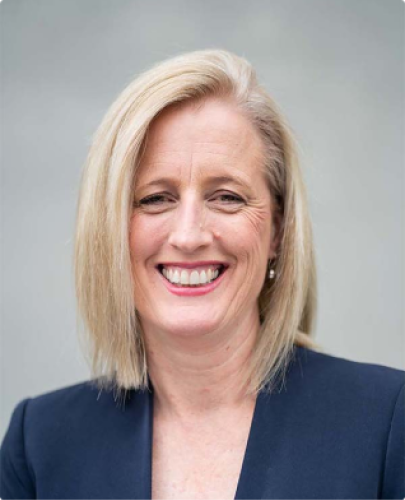
TV Interview - ABC Afternoon Briefing
SENATOR THE HON KATY GALLAGHER
Minister for Finance
Minister for Women
Minister for the Public Service
Minister for Government Services
Senator for the ACT
PATRICIA KARVELAS, HOST: Let’s get an immediate reaction to the Reserve Bank Governor's press conference and, of course, decision, I want to bring in the Finance Minister, one of the key economic ministers in the government, Katy Gallagher. Minister, thank you for joining us this afternoon.
MINISTER FOR FINANCE, KATY GALLAGHER: Thanks for having me on, PK.
KARVELAS: Minister, right now, a mum, a dad, a worker trying to stay on top of their mortgage repayments and grocery bills has been hit by more pain. What's your message to those Australians who are no doubt in profound financial pain right now?
GALLAGHER: Yeah, I think today's decision by the bank will hit those households very hard, and they're already feeling under pressure. And a further rate hike today will just increase that pressure. And we've got an inflation challenge in the economy. The bank, under its mandate, has to respond to that, and government needs to ensure that the decisions we take don't make that job harder. But, you know, we've said a number of times the war in the Middle East and the subsequent impacts of that and the impacts it's having on our economy are real. They're being felt in every household. And the war couldn't end soon enough.
KARVELAS: Reserve Bank Governor Michele Bullock says the rate rise is not a response to the direct inflation effect of rising oil prices due to the Middle East war, but rather—and I'm quoting here because I watched very closely—"to address domestic capacity pressures". Doesn't that put the onus on your government and all aggregate spending, obviously, in the economy? Isn't that the real message from what she's had to say?
GALLAGHER: Well, certainly we take the responsibilities we have very seriously, which is why we've been taking the approach we have in the budget to find savings, and we've already flagged that. We've got more work to do there in the Mid-Year Economic and Fiscal Outlook, which we're currently working on now. But, I think the Governor also acknowledges the subsequent and flow-on effects of the conflict in the Middle East. That's upfront in their statement today. They have to respond to those circumstances; we have to respond to the economic circumstances we face. And that's why the decisions that we've taken in budgets and in the budget update that we're in the thick of now are important decisions, but ones that we take carefully because we're also mindful of the fact that we have to support people through this as well. I mean, I hear a lot of calls for cuts to government spending. I don't hear as many specifics about where people would like to see that come from. And, in fact, we've got savings in the Parliament now that the Parliament's refusing to pass. So, those challenges about how we meet all those pressures in health, in aged care, in disaster funding, which has increased by 280% since we came to government—all of these are decisions that we have to manage and look for savings at the same time. So, I think in your intro you said these are all very difficult decisions and challenges. There's no doubt about that.
KARVELAS: Yeah, I'm glad I'm not making them, but I know people want you to make decisions that lower inflation. So, let's look at some specifics. Given you are looking for savings—you've been clear about that—is the fuel tax credit one of the things you might consider as soon as MYEFO?
GALLAGHER: Look, we haven't been doing work on that, but I really don't want to get into a rule-in, rule-out when we're heading into—and, you know, we had a meeting yesterday, we've got meetings this week where we're weighing up lots and lots of decisions across government. It wouldn't be right to do so, but you can imagine, and me as Finance Minister, I'm looking on the spending side of the budget, so I'm looking across government in programs where they might be growing very fast, or where there's, you know, where we're having to reprioritise within portfolios to meet some new pressures, and even things like meeting the new—you know, because the bond yields have been higher—managing some of those costs as well.
KARVELAS: Okay, I want to go to that. You said it's not something you're considering at the moment. The fuel, the fuel rebate, $13 billion a year, though—it's really expensive. It's something that those, including Andrew Forrest, who I think was just with the Prime Minister at Chalkam, have been advocating for. Is it worth revisiting in light of the spending question?
GALLAGHER: Well, we consider all of these issues across the board. I just don't, you know—and I understand, I've met, I've certainly had the feedback from Mr Forrest. That's not a universal opinion from that sector, I would say. But also we are still dealing with quite significant pressures around fuel and around business inputs into important industries like mining, like farming, because of the war in the Middle East. And so, some of our thinking in terms of what we can do in MYEFO really is where are the opportunities right now that won't have other impacts, including how we provide assistance to people? I mean, I know a lot of the people, I guess the commentators, the economists, they don't often talk about the fact that we need to support people through Medicare, through bulk billing, through provision of aged care packages. We have to build our defence capability. We know and understand that we have to respond to a warming climate where disasters are happening more often and they're more intense and more severe. And we have to make sure people are getting supported through those. And so these are across the board, there's no shortage of those pressures coming at us. But the decisions we need to make and how we achieve savings—and in these forecasts, you'll note, and I heard you talking to Tom about it, public demand is actually being revised back, and that is because of some of those savings decisions that we have made in previous budgets that we've been talking about over the past few months.
KARVELAS: But you mentioned you're currently looking at areas of growth now. NDIS is obviously one of them. We know about that. And you're right, that's been factored in. What can you tell us? I mean, surely you can give me—I know you can't announce something and you're still in the deliberations through the ERC budget process—but what are, where are the growth areas that you're currently identifying that you're considering pairing back from?
GALLAGHER: I mean, I'm not trying to not answer your question, PK. I really am not wanting to pre-empt some of the discussions that we're actually having. You know, throughout this week, we've had, we've started the process, we haven't finished it, but we look across the board and we report against programs, you know, either in budget or through MYEFO, so people can get a sense of where things are growing or there's more pressure coming, or new pressures coming our way. There's no shortage of those either. But our job, my job is to make sure that we are meeting the responsibilities we have to deliver services to the Australian community, but that we're also looking at ways to reprioritise so that it's not just an add-on to expenditure, that we are looking at where we can reduce it and also where we can reprioritise.
KARVELAS: Okay. Reprioritise ends up being, as you know—I don't have to explain to you, but also for our viewers—spending the same amount, but just moving it around. That question about net savings is key. You and Jim Chalmers have not been clear about whether you will deliver net savings. Can you be clearer? After the Reserve Bank Governor has spoken and we are now in what is really an entrenched period of pain, will there be net savings? Is that what you at least want to aim for, shoot for now?
GALLAGHER: So, if I can just say on the reprioritisation question, because I think people do dismiss that as sort of not effectively a save, what it allows us to do is to stop doing something perhaps that's less of a priority and put that money into something that's more of a priority. Now, if we didn't do that, it would be simply adding in. So, I don't want to underestimate the role that reprioritising has across government, because it's an important part of our fiscal strategy. On the point of net save—and again, I'm not trying to frustrate your viewers or annoy you, PK—but that is the combination, you know, the final decision, policy decision line is a combination or a culmination of hundreds and hundreds of decisions, some of which haven't been made yet. And we need to finish that work.
KARVELAS: I get that, and I am going to frustrate you again by asking—and, you know, this is what I do, but I think it's because people want me to do this—do you, I understand it's not finished. You're in the middle of it. I totally get that. However, is the aim to try and bring it down, given we're in an entrenched period of inflation, a whole year next year of this pain, that you want to actually bring that net number down? Now, is that a decision at a cabinet level that you've got to try and shoot for that?
GALLAGHER: So, we will be making responsible savings decisions, PK, in line with the job that we have to do in managing the budget responsibly. But I would say in the last two updates we have had, our policy decision line has contributed positively to the budget overall. And so that shows you, I think, the approach that Jim and I have taken, and we will continue to bring that approach to the decisions that we've got over the next few weeks as we finalise them. We're looking across the board. It's not unusual for a Finance Minister to have, or a Treasurer or a Prime Minister to have, an ambitious appetite around savings. But we need to work through our processes respectfully, and we will do that over the next few weeks.
KARVELAS: Okay. The public service, some argue it's bloated. You're going to tell me you've restructured it? You don't rely on any of these contractors? I already know some of the answer, with respect, Minister, but tell me, could you pull back spending on the public service more than you already are? And is that something you're considering?
GALLAGHER: Look, it's definitely an area that I examine closely, both in my role as Minister for the Public Service and as Finance Minister. I mean, we have in every update and budget, taken a saving from the public service. At the same time, we're rebuilding it. And we are rebuilding it, PK, because when we came into government, it didn't have the capability to do the job we needed it to do. And we saw that in payment times. We saw it in aged care, we saw it in bulk billing falling over, we saw it in the work that hadn't been done about disaster management. So, we have had—you know, people expect the government to deliver these services, and they need to be funded appropriately. But, yes, that is an area that we will continue to examine for further belt-tightening.
KARVELAS: Okay. And in terms of cost-of-living relief, you mentioned at the beginning of the interview, which piqued my interest, that you still need to consider helping people through this period. You know, there's obviously trying to repress the price on fuel. All of these measures on the size. Are they things under active consideration still?
GALLAGHER: Well, I think our focus on cost of living has been in permanent cost of living, either through the tax system, through indexing pensions and payments, or through measures like cheaper medicines, bulk billing, establishing those Medicare urgent care clinics so that they're there permanently to help people with some of the costs that they were experiencing. Like, it's not too long ago that you couldn't find a bulk-billing doctor to go and visit. Now we have a huge amount, and I think Mark Butler released the numbers on Monday of an increase of 4,000 bulk-billing GP clinics across Australia because of our investment. So, these are the types of things that we want to see continue and provide that cost-of-living help in an ongoing way. But in terms of shorter, one-off cost-of-living measures, I think you talk about fuel, we have to be mindful of the job that we have right now with inflation staying higher than we would like for longer than we would like. And you see that in the forecast from the bank today.
KARVELAS: Does there need to be further work and further tax reform potentially?
GALLAGHER: Well, we've made some pretty significant tax reform in this budget, and we've talked a lot about that on your show, PK. And we've got more of that tax package coming through, the Working Australians Tax Offset. We've got a number of bills that will need to pass the Parliament this year, so our focus is on getting that job done.
KARVELAS: Okay. Just finally, Minister, you're in your fifth year in government. Is this the most difficult time you've faced as Finance Minister?
GALLAGHER: Look, I think there hasn't really been an easy time when—and particularly the last, I think, you know—there's been a lot of different things thrown at us as a country. Our job is to respond to those with careful and thoughtful and responsible decisions. But, yeah, there's no shortage of challenges on my desk right now. But I'm not asking for any sympathy for that. I've got a big job I turn up to every day to try and make good decisions in the interests of the country, and I'll continue to do that.
KARVELAS: I have to ask, I want to ask you finally, and I've been told to wrap up 100 times by my producer, so I've just broken all the rules and I'm sure I'll be in trouble. But I have to ask you this. The Governor said something which I found so interesting. She said a lot of commentators are pretty sure they're entirely sure of the strategy. And she said, "I'm not afraid to say I am not sure." Are you also unafraid to say you're not sure as well?
GALLAGHER: Look, I didn't catch that. I didn't catch all of the Governor's press conference, so I'm not sure in what context she said that. But if your general question is, are decisions always black and white or sometimes there's grey? I can confirm that is the case. I mean, there are in any budget or any budget update, there are literally thousands of decisions that get made that end up, you know, getting, you know, putting out a media release on the day. So, you know, a lot of those are difficult decisions and judgement decisions, but that's our job, is to make those decisions and make them in the best interests of the country. And we try to do that every day. That's what Jim and I do. It's what the PM does.
KARVELAS: Finance Minister, many thanks for joining us.
GALLAGHER: Thank you.
KARVELAS: And that's the Finance Minister, Katy Gallagher, on today's interest rate decision, the budget bottom line and some of the things the government is looking at in terms of pairing back spending, including public service and the cost to the taxpayer of some of those programs.