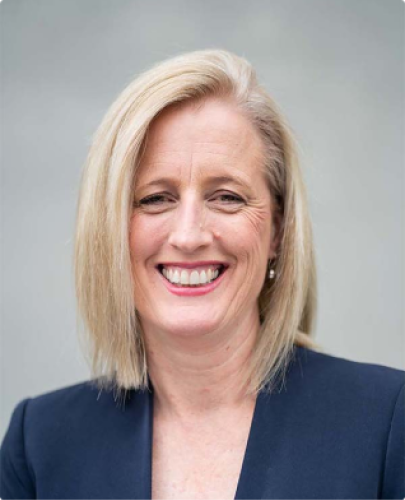
Radio Interview - ABC Radio Canberra
SENATOR THE HON KATY GALLAGHER
Minister for Finance
Minister for Women
Minister for the Public Service
Minister for Government Services
Senator for the ACT
ROSS SOLLY HOST: So, yes, as I mentioned, the Reserve Bank will meet today and it's expected that they will bump up the cash rate again. It'll be the fifth rise this year and it will return us to rates that we've not seen for 18 years. Senator Katy Gallagher is the Finance Minister, also, of course, ACT Senator. Katy Gallagher, good morning to you.
MINISTER FOR FINANCE, KATY GALLAGHER: Good morning.
SOLLY: It's going to happen, isn't it? I mean, I don't think I've seen a single economist predict that everything will stay as it is today.
GALLAGHER: Well, that is a matter for the Reserve Bank. We do not pre-empt those decisions. They're ones that they will consider later this afternoon.
SOLLY: Do you think we are in danger of ending up in a recession, Katy Gallagher?
GALLAGHER: Well, that's not what the Treasury forecasts which were released at Budget say, but all of those forecasts will be updated in MYEFO, so you'll get the latest sense of those. But it's true that we are in very challenging economic times. The inflation is higher than we would like. The war in the Middle East is real. We're seeing the effects of that play out. You look at the latest inflation data and, in fact, what Governor Bullock also said is that the conflict in the Middle East has really had an impact on those inflation settings, on our inflation data. So, you know, we're dealing with all of that. Every advanced economy is dealing with that. We're seeing that trend in other countries as well. But our job is to make sure that the decisions we take don't impact on inflation.
SOLLY: Yeah, well, I'll come back to that. Paul Keating, of course, once said that this is a recession we had to have. Do we need a bit more shock and awe, Katy Gallagher, do you think? Because obviously people are throwing money around with reckless abandon. That's how we've got this situation that we're in.
GALLAGHER: Well, my discussions that I have out and about are that people are feeling this and feeling it very heavily and, you know, feeling it when they fill their car up, feeling it at supermarkets –
SOLLY: So, a recession would be a disaster, wouldn't it?
GALLAGHER: Well, I mean, I'm not speculating on that. The Treasury forecasts, you know, provide their forecasts about the economic forecast in general, including about economic growth. But there's no doubt that people are really feeling the pain of the economic circumstances that we're in right now. And I should again say, yes, there are domestic challenges, but this is something that has been seen around every advanced economy. And the war in the Middle East is having a significant impact on advanced economies in relation to inflation.
SOLLY: It's not the only impact, though, is it? Besides the Reserve Bank adjusting the cash rate, Katy Gallagher, what else can you do to drive down inflation?
GALLAGHER: Well, we've got to, through the decisions we make, ensure that we're managing the budget responsibly, which we are, but we've also got responsibilities to make sure that we're funding services that people need. And that's, you know, finding the balance there is something that's on my desk every day. We're in the thick of all of those decisions now as we lead up to MYEFO being released in December.
SOLLY: I know you told David Speers on the weekend that every department will have to look at possible savings. Are some departments going to have to really—are they in for a bit of a shock, Katy Gallagher? Because in the end, as you said, you've got to tighten that, you've got to tighten spending, you've got to rein in spending somehow. Are some departments in for a rude shock?
GALLAGHER: Well, we look across the board. We come very broadly and it's not in particular looking at any department; we're looking more at policies and—and obviously they're run by different departments.
SOLLY: Do you think there's a lot of waste there that can be trimmed back, though?
GALLAGHER: Look, I think there are always ways you can find savings. Yes. I think we're asking the public service to do a lot more than it's ever done before. And this is the point I tried to make on Insiders on the weekend. You know, people always go back to, oh you know, 20 years ago spending was like this and now we're here, and the point I was trying to make is, yes, but there was no NDIS. Disability spending constitutes 2% of GDP at the moment. That is very different to 20 years ago. Aged care, we're going through huge demographic change there. If you look at aged care packages, 20 years ago, it was about 30,000. We're now at 300,000.
SOLLY: And these are projects which I'm assuming, Katy Gallagher, you'll be very reluctant to see cuts in, so you have to find them elsewhere, don't you?
GALLAGHER: Well, I guess the point I'm trying to make is the pressures on the budget when everyone goes out and says, cut spending, you know, and this is the only answer to the problems we face, which I don't agree with, but I do believe we have to be prudent in our decisions that we take. But there has to also be an acknowledgement that people expect and should have access to bulk-billing doctors and Medicare Urgent Care Clinics and cheaper medicines and aged care packages and the NDIS if they need it. And another example I'd give you, Ross, where things have changed is disaster relief spending—a 280% increase in that because our climate is changing and we're having more disasters and they're having more impact. So, the budget itself is having to do a lot more heavy lifting. And within that we have to find savings and reprioritise, just like any business does. And we will be doing that.
SOLLY: Just on the disability spending. The Financial Review is reporting today that Treasury has told the National Disability Insurance Agency that it's not convinced that it can find the $38.2 billion savings over four years. I mean, that is a central part of the savings you are looking for. Are you convinced, Katy Gallagher, that they can find those sorts of savings?
GALLAGHER: Well, we have to find it. Otherwise, the social license for the NDIS will start to disappear. It cannot keep growing at the speed with which it's growing and consume more and more of the budget, because if it does that, we have to find reductions elsewhere. And that was the situation we're in. But every time we bring savings, and even the NDIS, when we brought that legislation to the Parliament, the Greens never backed it, the Liberals delayed it, that delay cost several hundred million dollars. And we've got savings, there were some modest savings around veterans' health, there are some modest savings around PHI, the private health insurance, none of which are getting through the Parliament. So, this is the other part of the—
SOLLY: So, your advice to the National Disability Insurance Agency would be, try harder, if—
GALLAGHER: Well, we have. Absolutely. We have to deliver those savings and if it's not done in the way that—if they're having problems, we find it another way.
SOLLY: And just on the CPSU, yesterday it said it's not happy with the current wage offer, 9% over three years. Given what you've just been saying, Katy Gallagher, and having to rein in spending, you'd be pretty reluctant, wouldn't you, to up the offer?
GALLAGHER: Yes. I mean, it has to be affordable. And so, I mean, there are obviously different components to bargaining with your employees. Part of that is the wage offer, part of it's conditions. And so we're at the table negotiating in good faith and we'll continue to do that and try to finalise this as soon as we can, because I think, you know, the public service has a lot of work on its plate and bargaining takes up a lot of time. So, the sooner we can resolve it, the better.
SOLLY: All right. Senator Katy Gallagher. Really appreciate your time this morning. It's going to be a big day. Thank you.
GALLAGHER: Thank you.
SOLLY: And good use of my word of the day, by the way, as well. I heard you sneak it in there.
GALLAGHER: Thought you'd appreciate.
SOLLY: Yeah, I did. Of course I did. Yeah. Thank you very much Senator Katy Gallagher.