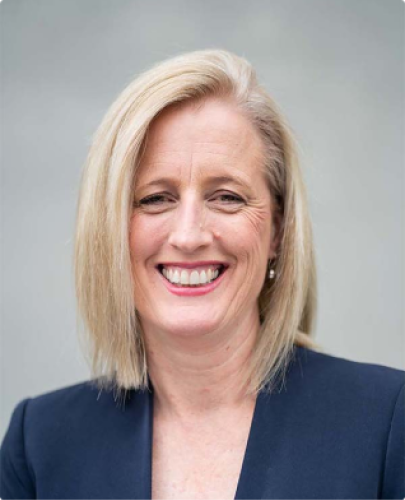
TV Interview - Insiders
SENATOR THE HON KATY GALLAGHER
Minister for Finance
Minister for Women
Minister for the Public Service
Minister for Government Services
Senator for the ACT
DAVID SPEERS, HOST: Katy Gallagher, welcome to the program.
MINISTER FOR FINANCE, KATY GALLAGHER: Morning, David.
SPEERS: Is Jim Chalmers the only one taking responsibility for the Government's difficulties?
GALLAGHER: Well, just watching that clip there, I mean, I think it's self-evident what he's saying. I mean, he's speaking for himself, he's putting up his hand for the role that he plays in the decisions, you know, around the budget, I think that clip related to. But these are collective decisions. All of us are part of those decisions and we all take responsibility for them.
SPEERS: Well, does it sound to you that the Treasurer at least feels like he's the only one taking responsibility?
GALLAGHER: I didn't take it that way. I think it was a long-form podcast. They'd gone through a lot of issues before that. I think he was simply saying that, you know, he takes responsibility for the decisions he makes as Treasurer, just as I make them as Finance Minister, but collectively, and it's not just the ERC, it's the Cabinet and the caucus stand behind the decisions we've made. Treasurers get a lot of focus, as do PMs, you know, so perhaps it relates to a bit of that. But all of us take responsibility for the decisions we've made.
SPEERS: And what about those stories during the week? Paul Sakkal in the Sydney Morning Herald reporting that the Treasurer has been the one in your expenditure review committees who's been taking the hardest line to make sure spending is—a lid is kept on spending. Is that what's happening?
GALLAGHER: Well, yeah, I've seen the stories written in the last few days. I think on one part, from my point of view, they're overblown. I mean, I work very closely with both the PM and the Treasurer and I don't think it's unusual to know that treasurers and finance ministers bring forward a range of options for consideration through our economic updates, our budgets, our mid-year economic update and, you know, we work through those. I don't think that's particular about this government. It's certainly my experience being in government in other governments that that's what those, the fiscal Ministers do.
SPEERS: At the bottom line here. I guess the focus here is on this relationship between the Prime Minister and, and the Treasurer. Now, that's always a critical relationship for any government. You know them both very well, work with them both. What is that relationship like?
GALLAGHER: I think it's a very professional and respectful relationship. They've known each other a long time. We've worked in these roles, the sort of three of us, for a number of years now. I think it's very, again, not unusual. We've all got slightly different jobs and come at things from slightly different perspectives, as you would expect. And so, robust discussions as part of that, through our processes, I think is actually a good thing. But at an individual level, very professional and very respectful.
SPEERS: Very professional, very respectful. What's not unusual, though? You're saying there is some degree of inevitable tension there?
GALLAGHER: Well, I'm just saying we've all got different jobs. Like, you know, I've got a role as Finance Minister to say no to a lot of people. Now, that often puts you in difficult conversations with colleagues. But that's the job that I bring. Other Ministers, you know, want to do more. I've got to find out, is there room to do that? More often than not, there's not.
SPEERS: I appreciate that. The PM and the Treasurer. Are you saying everything's rosy?
GALLAGHER: Yeah, absolutely. But we do want people doing their jobs and they have slightly different jobs. One's the PM, one's the Treasurer. I'm the Finance Minister. Now, how we resolve all of that is the result, decisions that are shown in publicly, but, there's always a contest of ideas and I think that's healthy and good.
SPEERS: Well, let's turn to the difficulty for the government right now with inflation. The Reserve Bank is expected to hike interest rates again on Tuesday. That would take the official cash rate to its highest level in 18 years. We hear the government saying it understands how difficult this is and that you will have more spending cuts to come. But how serious are you about this? Is the government prepared to fundamentally change direction on spending, or is that too difficult?
GALLAGHER: Well, first of all, I think we should acknowledge that we have found savings in every budget and every budget update since coming to government -
SPEERS: And new spending, to be fair.
GALLAGHER: Well, if I just deal with that, we've improved the bottom line in every budget and every budget update. And in fact, the last two budgets and budget update, our net decision—policy decision line—has been positive. The final budget outcome came in better than expected, $6 billion. So, when you look at the combination of all of those decisions and the role the budget's playing in the economy now, it's telling talks of an improving story, less Government spending. But, you know, the pressures on the budget are real, David. I talk about this in almost every interview I do because I think there has to be recognition that, you know, the pressures on the budget are increasing, not decreasing. And so not only is it how do we manage those, it's how do we repair the budget over time. And we've been doing that and we will continue to do it.
SPEERS: So, yeah, I'm interested in that. These pressures that you talk about—is the reality, in your view, that that does make it too difficult to really rein in spending?
GALLAGHER: Well, I think where you look at the areas of growth when we came to government, they haven't changed really, but it's been NDIS, health care, aged care—
SPEERS: Defence.
GALLAGHER: Defence spending and interest on government debt. Now, all of those continue to be very significant pressures. We've taken steps to, you know, deal with some of that in aged care and NDIS, with those co-payments and with budget savings around the NDIS. But, when we came to government, Medicare was in free fall. You couldn't find a bulk-billing doctor. Aged care had a lot of problems where we had to provide investment. Veterans, you know, weren't getting their claims processed. The public service was gutted. There were all of these issues that we had to deal with and we've been dealing with them step by step, carefully—
SPEERS: But it's all involved more spending. Again, are you saying that it's just too difficult to bring that down?
GALLAGHER: No, I'm not saying it's too difficult, but I am saying that there should be some acknowledgement of the world in which we are living and the pressures on the Commonwealth budget. And they are real, they are increasing and we have to deal with them and we are dealing with them. But yes, there's a lot of work going into the savings side. We haven't taken all of those decisions, as you'd expect. We'd normally do that in November.
SPEERS: Is the aim to have a net save, as in more savings than new spending?
GALLAGHER: Well, I can't, I don't want to pre-empt the ERC process. We will go through that, particularly in a lot of meetings over the next few weeks. But there is enormous effort being placed, particularly by Jim and myself, on the savings side. But—
SPEERS: Surely the aim would be to have a net save rather than—
GALLAGHER: I'm not going to get -
SPEERS: The economy doesn't need more spending now.
GALLAGHER: Well, I think look at our record, David, and what I'm saying to you is we're doing a lot of work on the savings side. But I can't get ahead of decisions that haven't been made yet. We're very conscious of the responsibility we have. I mean, government spending is not the primary driver of prices in the economy. But we have a role to play and we have been playing that role and we've got more to do. And we acknowledge, you know, that every decision we take in the budget has to be thought through carefully. But we also can't just pretend that these pressures on the budget aren't real.
SPEERS: People will say, okay, well, spending as a proportion of GDP is now at its highest level outside the pandemic for the last 40 years. And you can't say whether you'll actually aim to at least achieve a net save in your budget.
GALLAGHER: Well, can I take that point? Like, so, when you look at spending as a percentage of GDP, look, it's usually hovered between 24 to 26%, right, over the—for, you know, decades. If you go back to say we go to the start of that, the Howard era, you know, they were not dealing with AUKUS, they were not dealing with aged care with all of the demographics we're dealing with. They weren't dealing with Medicare falling over. There are all of these pressures that are coming. So, there has to be some acknowledgement of that. We are living in a different world. The budget's got to play a responsible role.
SPEERS: Doesn’t all that require finding savings elsewhere?
GALLAGHER: Well, we are finding savings. I mean, the fact that—
SPEERS: But spending has gone up to 26.9—
GALLAGHER: The fact that we're providing investment in those areas to stabilise them and provide, importantly, the services that people expect. Now, if you talk to people, they want to see a bulk-billing general practitioner. They weren't able to do that. We have to meet our national security responsibilities. We have to make sure we've got more aged care packages going out the door. I mean, they have increased tenfold in that time. This is the scale of what we're dealing with now. Now, our job is to deal with all of that and find savings and get the budget in better shape and take the job that we have to do and be responsible about that. And that’s what we are doing.
SPEERS: What's the process here as you try to identify these savings? Are you looking across every department and agency or are some quarantined?
GALLAGHER: Look, we look across the board. I mean, you know—
SPEERS: Not Health?
GALLAGHER: Well, we look across. I mean, Health has found savings in budgets, in previous budgets, but they've also had pressures that we've had to meet. And so every Minister has a responsibility here. They all come to ERC and we manage that. But no, I would not say that any area is exempt from the scrutiny that the Department of Finance and myself bring.
SPEERS: Interesting. All right, well, let me—let me go through a couple of ideas and I think one was just mentioned by Tom earlier, and that's the electric vehicle tax breaks and the home battery subsidies as well. These are available to people regardless of their income. Some economists call it middle-class welfare. Do you need to look at whether people on high incomes still need that support?
GALLAGHER: Well, we've looked at, if we talk about EVs and cheap home batteries, we've looked at both of those programs and made changes based on how successful they've been and they have exceeded expectations, I think, in relation to the uptake of both of those. But they also support a range of other priorities the government has, which is the energy transition, the electrification of the economy.
SPEERS: In terms of high-income earners, I want to show you this graph of the tax break and which income brackets are benefiting the most from the tax break. You can see under $45,000, not many. And those who didn't lodge their income. In the middle bracket, 39%. Then you get to the higher incomes, people over 135,000, 24% of them, and then 30% of this tax break is going to people earning more than $190,000 a year. Why do they need the support of taxpayers who are struggling to help buy an EV?
GALLAGHER: So, a couple of things there. In some of the data that I've seen, I'm not sure that—I was just trying to look for the date there—but in some of the—
SPEERS: Data, it's from the ATO, but it's the last two financial years.
GALLAGHER: So, some of the data I've seen, the uptake in outer regional and regional areas has been increasing, as it has with the cheaper home batteries.
SPEERS: That may be true, but they're on higher incomes.
GALLAGHER: So, and a couple of things, as I said, these programs are to incentivise the uptake and help with the shift to a cleaner energy system, which is the Government's priority.
SPEERS: They still need that help?
GALLAGHER: Well, we've made—we've made reforms to that to manage some of the demand, including on a cap on the EV, so 75,000 and under, and, and on the cheaper home batteries, the size of the battery program to bring those—
SPEERS: Why not means-test? Why not say if you earn above, if you're on a high income, you're not going to get that taxpayer help—
GALLAGHER: So on. Well, can I just finish - On the programs themselves, with the electric cars, we've seen a huge uptake with electric vehicles. We're also generating a second-hand car market in the electric vehicle space. You have to look at the other priorities with those programs. On the cheaper home batteries, you know, the support that that's actually providing to take pressure off the grid is substantial. We've got 500,000 people who've put batteries to get the benefit of their solar panels, but also taking pressure off the grid. Now we've made those changes. I think the batteries one came in on the 1st of May this year. The electric battery reforms will come in over the next two years, but these are very successful programs and programs that the Government has been keen to support. But—
SPEERS: Is it worth having another look at this, given the problems with inflation? I mean, I get your point about the energy transition, but a lot of these wealthy people are going to be putting batteries and buying EVs without the help of taxpayers. Isn't it worth having a fresh look at some of these and put a means test in?
GALLAGHER: Well, I mean, I've already said to you in an earlier question that nothing is exempt from the scrutiny. Well, nothing's exempt. Like, we come into the budget update process looking across the board. We get briefings from all different agencies and Ministers about what's happening within their programs. But we also think that these programs have been really important and some of the data is showing, very much so, that this is helping people on the outside, on the outskirts of cities and in regional areas where with some of those cost-of-living pressures and bringing their energy bills down.
SPEERS: What about your tax cuts, the ones already in the budget? The WATO that was announced in the budget, $250, it's going to land in people's pockets in July. Given inflation is still forecast to be too high then, is that still a good idea or is that going to make the problem of inflation worse?
GALLAGHER: Well, those are being factored into the budget, so they're there in our budget -
SPEERS: Inflation’s worsened.
GALLAGHER: And they have, and they have been, as part of our tax reform process, the overarching principle, which is to realign the tax you pay on your labour income, your wages, with the tax that's paid on assets and some of that rebalancing. So, kind of the changes we've made around negative gearing and trust is to go back into working people's tax returns. We think that's an important part of the of the reform process we outlined in the budget—
SPEERS: Even with inflation where it is? What about any, any thought—and clearly the government's been thinking about this—of even bigger tax cuts before the next election? Surely you're going to have to rethink that now.
GALLAGHER: Well, as I said, we are looking across the board at all of the decisions that we need to take in MYEFO. We haven't taken them yet. But things like the working tax offset was an important commitment we made through the tax reform process and it's factored into the budget already.
SPEERS: I want to ask you about the Marrickville Golf Club grant. Not so much, you know, what the money went to, sewerage works or not, but why it is that federal governments—and obviously not the first—why federal governments think they should be funding things like sewerage works at a local golf club or car parks or swimming pools. Why not leave this to local and state government?
GALLAGHER: So, I think there, I mean, candidates make election commitments in election campaigns.
SPEERS: That’s the problem.
GALLAGHER: Well, and I think, you know—well, I'll leave you to commentate on that. I mean—
SPEERS: We have local and state governments—
GALLAGHER: Electorates expect their candidates to be representing and arguing for matters within their electorates. And quite often that is around facilities and community facilities. Now, if you talk to local government, they will tell you they have nowhere near enough capacity to deal with some of the pressures, particularly around community facilities.
SPEERS: Why not give the money to local governments in block grants?
GALLAGHER: Well, most of it is—
SPEERS: So that they can then decide which golf club needs help, which car park needs fixing up.
GALLAGHER: Well, the local government are the delivery partner. But—
SPEERS: The federal government's decided that golf club's getting $6 million, not the other one.
GALLAGHER: Well, many of those commitments will—were developed through local government. Certainly the commitments that we made through our campaign were candidates working with local government about what the priorities were in their electorate.
SPEERS: So, are you saying this Marrickville Golf Club grant was the idea of the local government?
GALLAGHER: I'm saying in terms of the election commitments across the board, many of the candidates worked with local government associations, the council, about what their priorities were in formulating commitments that we made. And in many cases they are the delivery arm. Now, there is no shortage of facilities that candidates get lobbied on in campaigns where sporting facilities, club facilities, community gardens, you name it. And I think it's very reasonable for candidates to make commitments where they're responsible and where they test families value for money through the implementation phase—
SPEERS: Just a final one. Do you welcome the push within the Liberal Party to lock in the superannuation rules rather than allowing any access for housing?
GALLAGHER: Well, we'll see how that turns out. I mean, they find it pretty hard to land any position at the moment in any area. I mean, the Liberal Party have never liked super. They will always come after super. So, I can understand backbenchers wanting to put it to bed but we will see whether they can actually land a position.