Radio Interview - ABC RN Breakfast
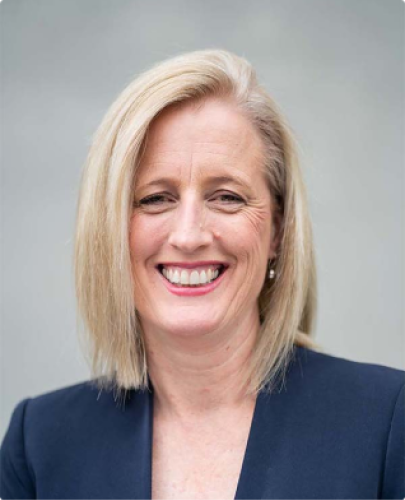
SENATOR THE HON KATY GALLAGHER
Minister for Finance
Minister for Women
Minister for the Public Service
Minister for Government Services
Senator for the ACT
SALLY SARA, HOST: ABC Radio National, Sally Sara with you for breakfast. Well, almost 5,000 threats and violent comments have been flagged on the social media accounts of 22 Labor politicians in just three months. That’s according to new data from an AI tool which is being trialled by some senators and MPs. The data also found about half of the more than 460,000 comments analysed between July and October were abusive. It comes as federal MPs yesterday shared messages of support for independent MP Helen Haines, who remains in hospital in a serious condition after she was struck by a vehicle last week. Prime Minister Anthony Albanese led the tributes:
PM: “Last Monday the member for Indi was just doing her job when she was attacked. While the investigations go on, we must not jump to conclusions. But nor can we shrug off the very real rise in anger that distorts and corrodes our public discourse. Enabled by the anonymity and speed afforded by social media. We are seeing rage and aggression increasing, not just in politics, but towards workers in hospitality and retail, in schools and in hospitals, towards police, paramedics and other officials. We’re seeing a normalisation of the language of grievance and violence. We must not conflate the robustness of Australian democracy with this rising tide of rage.”
SARA: That’s the PM speaking yesterday. Well, Senator Katy Gallagher is the Minister for Women, Government Services, Finance and the Public Service, and joins me in the studio. Minister, welcome back.
MINISTER FOR FINANCE, KATY GALLAGHER: Thanks for having me on.
SARA: So, some Labor senators and MPs are trialling the use of this AI tool. How surprised are you that 5,000 threats and violent comments have been flagged just between July and October?
GALLAGHER: So, I think it is the volume that people are, you know, feeling the pressure from. I mean, I think we’ve always put up with some pretty robust feedback in politics, certainly in my time in politics. But the volume, the scale and the forcefulness of the threats and the violence and the abusive language is something that I haven’t seen, certainly in the last couple of years. It’s just been increasing and it weighs heavily on people. And I think from my discussions with colleagues across the Parliament in the last week or so, we’ve just... People have just had enough and we’ve had enough from it, from our profession, but we’ve also had enough of it right across workforces across Australia. I mean, it’s too many people that go to work and get abused for going to work. There is little polite disagreement these days. And so this app, I think, reduces some of that pressure on individual MPs and senators. So, they don’t have to see these comments. They get quarantined beforehand and their staff who are having to deal with their accounts.
SARA: So, do they go to AFP? Where do they go?
GALLAGHER: Well, there’s discussion about what happens with kind of the more violent threats, the death threats, the threats of rape and harm to children, a process of formalising how we use the information from this tool to inform AFP is underway. This is a new... a new tool. Many of us, took it up just to see whether it would provide a bit of a breathing space between our work and the feedback we get about our work and if it would help staff as well. And the early results are that it’s doing those things. But we’ve got to understand a bit more about what we do with this information now.
SARA: How did the trial come about?
GALLAGHER: Look, it was organised through a third-party organisation who is looking at violence against women in public life. So, it started that way. But men are able to use the tool as well if they choose, and some have. So, it was really, you know, everywhere I go and I speak with women in senior roles or in public life, the abuse that they are getting online is one of the first things they raise with me. And so I think there’s a lot of research underway about how to deal with this. And part of it is collecting some of this information from this tool.
SARA: Does the tool distinguish between what it deems as violent language and genuine feedback? Because sometimes people can be genuinely furious about a government decision that’s going to affect them or goes against their views and principles.
GALLAGHER: Yeah, so that’s some of what we’re learning about it. So, there’s a big section called personal attack, and then it breaks it down into offensive language, sexist, you know, racist, xenophobic, all of the different kind of categories, and is able to categorise that. In some of the personal attack ones, I think there is a crossover, depends on your tolerance. I get between what we would perhaps say is feedback, robust feedback, and what others who might not put up with what we do on a daily basis see as a personal attack. So, there is some crossover there. I’m not pretending otherwise, but it is the volume of, you know, in my accounts, half of the comments are getting quarantined. If you look at sort of 50,000 comments, you know, over 20,000 of them will be quarantined under one of these categories.
SARA: Is there a risk of censoring genuine, robust feedback here?
GALLAGHER: Look, I don’t think so. I mean, it’s really a work management tool about how we’re going to... How do we, you know, it’s very difficult to go to work every day and just be abused constantly online. So, it’s about how we manage our working day and that of our staff. And I think the other thing that we’ve all been noticing is it has a chilling effect on people who genuinely want to engage with us. Because if you go to, say, my Facebook page and you want to write something about an issue, the chances are you’re going to be piled on from the people who are piling onto that account. And so people are not engaging with us in those formats because it’s not safe for them either. And again, this isn’t just about politics, it’s about any workplace where, you know, I was talking to someone who worked in a telecommunications company the other day. The internet goes down, therefore it equals a death threat. You know, like, this is some of the craziness we’re seeing in online behaviour. How does it get to, I’m inconvenienced, therefore I’m going to harm you, your children or take your life? I mean, it’s simply out of control in an online world. And we’ve got to make the platforms more accountable. I mean, Facebook is the worst in terms of the platforms we use. Instagram and TikTok, less so, but still bad, but less so. But the platforms have to help us here because the way it’s going now, our accounts are just a place for people to come and abuse us pretty vigorously.
SARA: Nine parliamentarians will receive security upgrades to their electoral offices after they raised concerns last week. Are there any more under review?
GALLAGHER: So, we’ve had a number that have been raised in the last week and those, as you heard from the Secretary of the Department of Finance last night at Estimates, those are being accelerated. But this is an area that Don Farrell manages in the Department of Finance under SMOS. But these are matters that are a daily review, really. People have raised concerns around EOs and safety of their electorate offices. It’s very legitimate that we have a look at that and respond.
SARA: You’re listening to Radio National Breakfast. My guest is the Finance Minister, Katy Gallagher. Speaking in Parliament yesterday, Opposition Leader Angus Taylor said he disagreed with the view that there is a causal connection between robust parliamentary debate and political violence. We heard from the AFP Commissioner, Krissy Barrett, on some of these issues on Insiders on Sunday. What’s your position?
GALLAGHER: Well, I think I can disagree respectfully with Mr Taylor on that because I definitely, in my own individual experience, have seen where there is a debate that I’m engaged with, the online threats, and not just online threats, and aggression towards an individual do increase. They are linked. And I think, certainly in my experience, and I think Krissy Barrett made that point on the weekend. But I think part of what we’re all trying to deal with and reckon with is, how do you disagree respectfully? And so in terms of Mr Taylor’s right to say that yesterday, that’s his view. It’s, you know, my right to say, well, I think that’s... I don’t think that analysis is correct and have a different view.
SARA: Returning to your portfolio, the Federal Opposition Leader Angus Taylor and Shadow Treasurer Tim Wilson yesterday revealed costings for $31 billion in savings to offset their income tax cut policy. Are those cuts achievable, in your view?
GALLAGHER: Well, I think they’ve got a big problem here in that they’ve announced a number of policies without savings in order or any way of paying for it, and they realise that now. But even if... even if you accepted all of the savings that they put on the table yesterday, or the proposals they put on the table yesterday, it would still have them spending much more than they’re saving and increase by about $600 billion in additional debt in order to service that. Well, I have a lot of questions about the proposals they put on the table. They’ve spent more than they were able to fund. They are going to overturn a lot of decisions, difficult decisions that we have made, and they’re going to have to work out how to pay for it. At the moment, they’re not in a position to do so.
SARA: In this time of inflation, which is hitting Australians very... And also, you know, feeding into the calculations around interest rates. Does the government need to do more urgently to bring down its spending to try and deal with this? But many Australians are in financial distress at the moment. They’re feeling as if things are extremely difficult and they’re worried about the future.
GALLAGHER: Well, the Treasurer has already made it clear that we will have a savings package in MYEFO, just as we have done in previous budgets. I mean, in the last budget, $37.8 billion in savings from the NDIS, but over our term in government, $178 billion in savings. Now, some will say, oh, well, what are you doing next? But I don’t think you should underestimate the work that we have already done and the work...
SARA: Some of those savings haven’t gone through as yet, have they?
GALLAGHER: Well, I mean, and this goes to the point we have identified savings, we’ve got a modest save on PHI, private health insurance, that I agree there’s a number of people that aren’t happy with, but that’s about finding some savings and reinvesting into aged care to deal with the demand we’re seeing there. And that’s not acceptable to anyone in the Senate at the moment. That just shows you how difficult it is. 80% of the budget is spent on demand-driven programs, pensions, payments, payments to the States, it’s automatic payments and it’s very, very difficult without legislation, I think, and PHI is a classic example here where the Opposition demands saves and then you bring saves, sensible and modest saves, to the Parliament and they say, no thanks, you should be spending more on that. And so this is part of the work that we do every day, but the Treasurer and I will be bringing savings through MYEFO.
SARA: Just finally, we’ve had a report from the Ombudsman about the automated tools in aged care. This is for a government that called a Royal Commission into Robodebt. Have the lessons been learnt about using tools that don’t take into account human situations?
GALLAGHER: So, I think it’s quite different. Robodebt was about raising debts, essentially money that wasn’t owed, without a human decision maker. The automated assessment tool in aged care, you have a human involved in terms of the assessment and the information. And the Royal Commission into Aged Care actually said you need a consistent, independent assessment tool.
SARA: But we know from this Ombudsman’s report, for example, where there are windows that you can type in text, that doesn’t get considered at all.
GALLAGHER: So, a couple of things there. It’s a new system, it’s dealing with unprecedented volume. I think there’s over half a million people coming through that tool just in the last year. There’s a review underway that the Minister has put in place to understand some of these issues and respond to them. And in the last Parliament, last sitting week, we implemented an escalation pathway that allows for human override in certain assessments. So, we are responding in real time to a new system that’s being built and under enormous pressure from the demand coming our way. There’s more work to do there, but the Minister for Aged Care is doing a great job in leading that work.
SARA: Minister, thank you for coming in this morning.
GALLAGHER: Thank you.