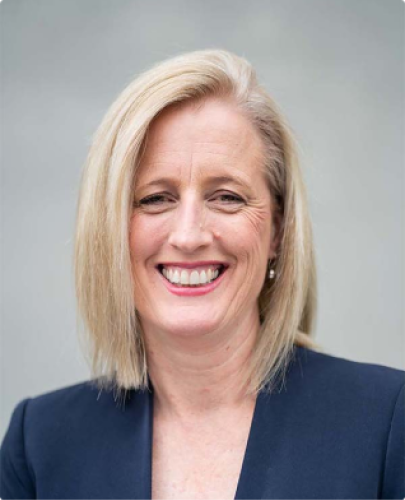
Radio interview - ABC Radio Alice Springs
SENATOR THE HON KATY GALLAGHER
Minister for Finance
Minister for Women
Minister for the Public Service
Minister for Government Services
Senator for the ACT
WILL REGAN, HOST: Federal Minister for Finance Katy Gallagher met with the now acting Chief Minister, normally Deputy Chief Minister Gerard Maley, to discuss their concerns on how federally funded programs are being administered by the Northern Territory Government. Now, more than 70% of Territory Government's revenue comes from Commonwealth funds. They raised the topics, and they have concerns over how the Territory Government is spending money towards domestic violence services, housing, and the NT's remote housing plan, which is that $4 billion 10-year housing plan, which was originally slated to build 2,700 houses, which looks like it'll be set for far fewer, and they also discussed disaster relief. It hasn't been without a response from the Deputy Chief Minister/acting Chief Minister Gerard Maley, saying it's a bit rich for them to tell the Territory how to do things. But Minister for Finance Katy Gallagher joins me this morning. Good morning, Minister.
KATY GALLAGHER, MINISTER FOR FINANCE: Good morning, Will. Thanks for having me on.
REGAN: What brought you to the Territory last week?
GALLAGHER: It was really to, as you said in your preamble there, really to open a discussion with the Northern Territory Government about some concerns that we're having across a number of different portfolio ministers about programs where we're investing money and seeing that actually roll out on the ground, and so it was really to have, I tried to have a meeting with the Chief Minister. She wasn't available in the end, so I met with the Deputy Chief Minister to really open that discussion and see what needs to happen to get both governments kind of happy with how things are going.
REGAN: What are your main concerns with how the Northern Territory Government are spending Commonwealth money? What was discussed in that meeting?
GALLAGHER: Well, I guess we started with Malarndirri McCarthy as the Minister for Indigenous Australians. We're all signed up to Closing the Gap targets. That sets the framework for us to provide investments. There's a number of areas: housing, disaster relief, women's safety, in particular, were the three that we raised around where we're seeing problems either in money flowing, or delivery, or even getting the paperwork in when it comes to disaster recovery funding to allow Commonwealth funds to flow into communities that need that money, and so it was kind of to raise - Well, it's coming up in a number of different portfolio areas. We have a ministerial working group on Closing the Gap, which brings together about I don't know maybe 12 Commonwealth ministers, and to see how we're all going. And as part of that discussion, it was pretty clear that there was a level of frustration across a number of ministers about engagement with the Northern Territory Government, so Malarndirri and I decided to just go to the Northern Territory Government and say, "Look, this is what we're hearing, this is what we're seeing. Is there a way? Is there any problem here? How do we get this back on track and make sure things get delivered?" And yeah, have that discussion. Hopefully, I'll be able to have it with the Chief Minister soon once she's back from leave.
REGAN: What are your fellow ministers saying about engagement or correspondence and communication with the Northern Territory Government? How would you describe your relationship with the NTG?
GALLAGHER: Look, I think there's always an element of tension between the Commonwealth and state and territory governments. I mean, because we're all different governments, we've got you know our own priorities, and then there's all these national agreements. And I've been the Chief Minister in the ACT, so I completely understand what running a territory government's like and how difficult it is. You've got so many demands on your budget, all the rest of it. And so, the discussion we wanted to have was look we're investing in housing, for example. We're investing all this money going into remote housing to deal with overcrowding. We'd agreed, and governments had signed on to build 2,700 homes. The targets on an annual basis are not being met, and now it looks like the Northern Territory Government wants to wind that back quite considerably. I was out at the Daly River not long ago. I had a company, a housing, you know, builder, come up to me and say, "Look, I can build 40 houses a year, but the money isn't flowing, and so I'm not able to build those houses anymore. And I've had to let my apprentices go because I don't have that certainty of that funding coming through." Now we know the funding's there, so something else is happening, this is what we need to deal with and make sure that every if there is a problem at our end, we're fixing it. If it's a problem at their end, we're fixing it because ultimately we just want the outcome to be delivered.
REGAN: There's a few things to that NT remote housing plan, that $4 billion 10-year plan. The Housing Minister Steve Edgington, with the Territory Government, said that that was originally a range between around 2,210 houses to 2,700 houses, and that depended on which kinds of houses were going to be built, whether they had three or four rooms. It does look like it'll be scaled down, and the latest number could be 2,210. But what's your response to the Housing Minister saying that it was more of a range? That 2,700 was an up-to figure.
GALLAGHER: I mean, the thing is, we're happy to have a discussion with the Northern Territory Government. Our frustration is, it seems that the money is getting is pretty slow to get out the door, and when you've got builders saying to us, "We're ready to work, we've got apprentices that we've had to let go because we're not getting that funding out the door." Then, it's my job to sort of say, "Well, is there a problem here?" So, you know, I think the housing ministers will continue to discuss this, but we need to make sure that we are getting the money out the door, and houses are being built.
REGAN: Did you get down to the crux of why or what is going on with that money being administered?
GALLAGHER: No, you know it was really because - the Deputy Chief Minister stepped in at the last minute - I think it was really just to say, look, this is why we're here. We want to open the discussion. We want to do everything we can to make sure that the relationships where it needs to be will come back to the Chief Minister when she's back. But as an opener, here are the issues that we are wanting to raise with you. There was some response in the sense, and I completely understand this: the Northern Territory Government saying, "Look, we're a small public service, a small bureaucracy with lots of different responsibilities. We're doing the best we can." That may be the case, but we need to make sure that we've done everything we can to make sure that there's no barriers to some of this assistance and investment getting out where it's needed.
REGAN: Another barrier that seems to have popped up in this plan is where the money is going to come from for headworks and admin. Now it's been estimated that that could cost up to $1.4 billion. Territory Government is saying that should be taken out of that big, the original $4 billion budget, with a two-year review imminent for the plan. What's the latest with that agreement, and where that money for headworks and admin will come from?
GALLAGHER: Yeah, so that's right. The two-year review will start. I think both governments are very keen to get that done as soon as possible. I think this is this goes to the heart of the issue, though. We to reach, you know, headworks and land servicing is always an issue in any jurisdiction. Acknowledging that the Northern Territory has a greater geographical distance and all of the Northern Territory specific issues, but the money that we'd invested in that was to deliver housing of a $4 billion agreement to now say you want $1.4 spent on sort of land servicing costs and associated means that the number of housing being, if we agreed with that, the number of housing being delivered would be significantly reduced. So we'd want to understand that a lot more before we agree to that.
REGAN: Okay, I'll move on to the Central Australia plan. Now this was announced from the Federal Government in 2023. It's $350 million, most of Commonwealth money to improve community safety. You support education, health, and infrastructure here. What do you make of how that money is being spent in the centre?
GALLAGHER: Yeah. Look, I mean, Marion Scrymgour has been leading this along with Malarndirri McCarthy. You know, the I think the rolling out of that program is going reasonably well. We've got relationships where we're direct funding organisations, so that money can flow. But we're always looking to make sure that both governments are working side by side and to deliver the outcomes that we need under that plan. So, I mean, that wasn't one we raised specifically in this first meeting, but again, I think as we work through and hopefully have this next meeting with the Chief Minister, some of these other issues will be on the table.
REGAN: Sally on the text line says the gap, in terms of Closing the Gap, is not improving as much as the government would like, yet millions of dollars are allocated to this cause every day. Could you ask the Minister what she and the federal and state governments are doing to close these gaps? We know a lot of those targets have actually been going backwards in the Territory. What is your government doing to close that? Especially after what we found out just recently about some of those targets going backwards.
GALLAGHER: Yeah. So Malarndirri in the meeting we had last Friday started the meeting by saying the Closing the Gap targets, and the agreement is a national agreement where we all have responsibilities. Obviously, in some areas we have greater responsibility than others in sort of being directly responsible in a sense, and then the Northern Territory Government has their areas where they have more, you know, for example, in you know the justice system where they run have more direct funding responsibility. But that's the whole point of the meeting, really, was to say, look, we've got this. We're both investing considerable amounts of money, we've signed up to Closing the Gap. The outcomes that we're seeing are not going in the direction we want them to go, and we're worried about the timeliness of some of the money getting out the door. What is going on here, and how do we correct this relationship into making it more functional? But the Closing the Gap target guides everything. Really, all of the discussions that we've been having.
REGAN: It's quarter to nine on ABC Alice Springs speaking with the Federal Finance Minister, Finance Katy Gallagher. Minister, what about? It was mentioned on Friday and discussed in the meeting. I understand that considerations from the Federal Government around funding NGOs, non-government organisations directly, as opposed to giving that money to Territory Government. What was discussed in the meeting around that?
GALLAGHER: Yeah, well, in health, for example, in delivery of healthcare, it's a much more developed system between the Commonwealth funding organisations directly through the ACCHOs mainly network, but there are other examples, including in Central Australia, where we have funded direct to organisations, and that we are prepared to continue to look at that as a way of not only you know investing in the capability of First Nations organisations, but also if there are issues with getting money out the door, looking at a way to get it out the door faster. Now, the Northern Territory Government were pretty strong in their response to that. Just you know, to be to be fair, they said they saw that as a problem. They thought money should come more through the Northern Territory Government, and I guess we were saying, well, that's fine, but we want to make sure the money is going out the door and helping the communities it was originally it's there for, and so we've opened the batting on that in a sense to say look we are thinking about it. Certainly, Minister Plibersek in the area of domestic, family and sexual violence is considering it for the new money that we put in the last budget, which is a couple of $100 million across the country, but where there would be allocation in the Northern Territory, and this is an area where we are considering that as an option.
REGAN: What would that look like, and how far off are you from actually enacting that and designating more money to NGOs rather than to the Territory Government?
GALLAGHER: Well, in relation to Minister Plibersek's area in women's safety or family, sexual and domestic violence in that area, that money is due to go out this year, so we would be pretty close to that. And I think one of the concerns that Minister Plibersek had raised was that she's seen where some organisations have had funding removed in the Northern Territory or lost their funding, and we don't want our extra funding to go plugging gaps that have been created by a decision of the Northern Territory Government, and so that was really the message we put on the table. We're not going to use this additional money to cover shortfalls in your own budget decisions. We want it to be extra investment, and if that's going to be the case, then directly funding organisations might be the way through this.
REGAN: On to another topic. I mean, the NT Government have said repeatedly they want to have a closer look at the number of NGOs operating here and how much they are funded. Gerard Maley reiterated that call publicly on Friday, and I'm sure probably in your meeting as well. Is there an audit coming for all federally funded programs in the NT?
GALLAGHER: Yeah, so Gerard certainly raised that in the meeting, and we were able to assure him that any funding coming from the Commonwealth, organisations have to be responsible for that. They have to meet milestones and outcomes for that money to flow and to continue flowing. But I also said to him, so we're comfortable with the kind of auditing arrangements that we have in place already for grants, but I did say to him, if there are organisations you have a concern about that you don't think are, because anecdotally, he raised it as in a way, but didn't say any particular problem. So I said, if there are organisations that you are worried about, that you think there is an issue in terms of not delivering, then give us a list of those organisations and we'll have a look at it.
REGAN: And you are yet to see that list, if there is going to be one?
GALLAGHER: I haven't seen. Yeah, I haven't seen it yet. But if there, if the one does come through, we will definitely have a look at it. I gave him my commitment on that.
REGAN: Okay. Something else you mentioned was disaster relief funding. Now I understand a lot of that, and a lot of that focus might be on the Top End. Earlier in this year, we had pretty unprecedented, enormous amounts of rain that have left a lot of our roads currently damaged. Those unsealed roads, especially off our main arterial roads, off the Stuart. Was it discussed for disaster relief funding or flood mitigation funding as well for Central Australia? What was in that for Central Australia?
GALLAGHER: So, the issue there is that, as you say, there's been a number of significant weather events in the Territory, and as you say, mainly up north, but really ones that started in November 2025, and I think there's been three or four significant events that would be eligible for disaster relief funding for specific projects. It's usually around infrastructure response. Now we haven't had the paperwork filled out for that funding to flow. The Minister for Emergency Management has written to the Northern Territory Government urging them to apply. That's been going over a few months. Now, in this meeting, we did make some progress on that. I want to be clear: the head of the public service said that they would have their applications in by the end of the year, and so that money could flow, and we did get a letter from the Chief Minister just prior to the meeting to sort of identify some projects which they would be applying for Commonwealth funding for disaster relief. But hopefully we can resolve that by the end of the year because that's a year in kind of the making.
REGAN: Within that application, was Central Australia discussed? Do you understand? Will that be included in the application? Do you know?
GALLAGHER: Well, I think this was directly into those disaster-affected communities where there had been significant flooding. It's mainly linked to those. But look, we are having a broader discussion in the emergency management space, particularly around disaster resilience and disaster preparedness. I mean, it's a live one across the country, and mainly affects Northern Territory, Queensland, and New South Wales as the kind of disaster-prone parts of Australia. So that is a live discussion that's happening across all governments. I think about how do we shift from recovery into preparedness and resilience? And it's you know it's a difficult balance at the moment. But I'm sure that the Northern Territory Government will be putting forward that in their discussions with us.
REGAN: Minister, I might finish on this. James from Brattling has texted in saying, Minister, over a decade ago, my accountant recommended a corporate trustee and a family trust structure as a lawful way of holding assets for wealth creation and asset protection. Why do you consider it fair to retrospectively change the taxation environment in a way that increases the tax burden on assets I have accumulated and, in effect, redirects those gains towards welfare schemes that are not means tested? What's your response to that, Minister?
GALLAGHER: Well, I'm not sure about the last bit of that question about redirecting, but we are making some changes to discretionary trust arrangements. So, there are a whole range of trusts in place, and I'm not sure the specific way that that gentleman's trust has been arranged. But we are making some changes to discretionary trusts, and that's really to ensure that we are making sure that people who pay tax on their wages aren't disadvantaged compared to people who pay tax on their assets. So, there are a range of ways that I'm sure that that gentleman's tax accountant can advise him of any changes that will be made that would protect his interests, but on discretionary trusts, we are intending to make that change, and it's really to make sure that people who pay income tax aren't disadvantaged over those who are able to structure their income in a way that minimises their tax.
REGAN: Okay, Minister. Lastly, are there plans to revisit and have a meeting with the Chief Minister Lia Finocchiaro?
GALLAGHER: I hope so. We've written following the meeting, Malarndirri and I, to see if we are able to secure a meeting with the Chief Minister in the near future. I'm hopeful that we'll be able to do so.
REGAN: Minister, thanks for joining us this morning and thanks for staying on a little bit longer there.
GALLAGHER: Thanks very much, Will.