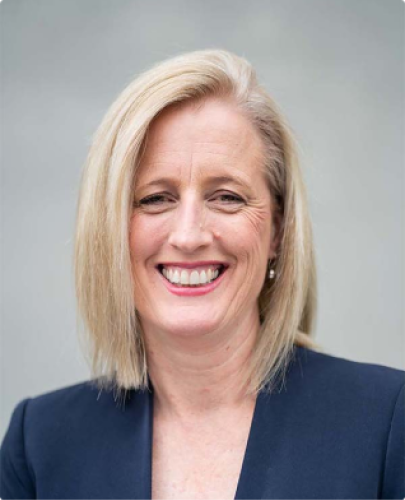
Radio interview - ABC Radio Darwin
SENATOR THE HON KATY GALLAGHER
Minister for Finance
Minister for Women
Minister for the Public Service
Minister for Government Services
Senator for the ACT
LARA STIMPSON, HOST: Oh, to be a fly on the wall in a meeting between the Acting Chief Minister, Gerard Maley, and the Federal Minister for Finance, Katy Gallagher on Friday. Travelling all the way from Canberra to sit down in person in Darwin, the Finance Minister had a message for the NT: spend the money we give you better or else we will direct it elsewhere. What do you reckon? Is the NT Government best placed to spend this cash or should the Federal Government redirect the funds? I spoke with the Minister earlier.
You've been a Chief Minister in the other territory, you'd know that Territorian’s really don't like being told what to do by the Federal Government. So, why do it?
KATY GALLAGHER, MINISTER FOR FINANCE: Yes, look, and I certainly said that in the meeting, like, I understand what running a small government is like. It's really, really difficult. But I guess the point I was trying to make and it was to really sit down, and we had originally had a meeting with the Chief Minister planned because I wanted to speak to her directly and just say, look, when we sit around the table with all of the Ministers that are involved in different programs of support coming to the Northern Territory, whether it be in education, housing, early childhood education and care, in all of those areas, there is an emerging issue of the Northern Territory Government's very difficult to work with. So, I thought, well, as the Finance Minister, we support a lot of investment into the Northern Territory. Really, I should go and see if there are any problems from the Northern Territory's end, put our issues on the table and hopefully work a way through so that we get the outcome we're after, which is, you know, in housing, that more housing is built, particularly in remote areas, so that we can deal with some of the overcrowding issues. But it's not one program, it's across the board. And it was really to open up that discussion and see what can be done to make it better.
STIMPSON: There's a few things I want to unpack there, but first, the reputation we have around your Cabinet table that we're difficult to work with. Can you explain what specifically that difficulty is between those several Ministers and portfolio areas you mentioned and our government?
GALLAGHER: Yeah, so, I mean, if I could take housing, we have a housing agreement, you know, the Northern Territory government's trying to negotiate that back so that it's about 900 less houses delivered over the life of that program and put the money into land servicing or costs associated with land. I was out at Daly River not long ago talking to people who were dealing with some of that flood recovery and I spoke to a construction company there who is saying, look, the money isn't flowing. I can build 40 houses a year, but I'm not getting any money because of that. I've let some apprentices go because we don't have the work coming through and if we're putting in the investment, we want to see it actually deliver, not only the housing there, but in that case, skills and jobs associated with it. So, that's one example. In family, domestic and sexual violence, where we see some organisations lose funding from the Northern Territory. You know, it doesn't make us want to cover that shortfall when we've already got money that we're needing to put into other areas. So, it was raising those issues. It was really saying, look, what's going on? How can we get this back on track and make sure that we are getting the outcomes we need? We want to work with the Northern Territory government. You know, they are the sovereign government of the Northern Territory and so we want to work with them. But at the moment there is a level of frustration around the Cabinet table.
STIMPSON: We are a sovereign government, but we do get about, above 70% of our revenue a year from the Federal Government through things like the GST carve-up and other specific deals that have been negotiated. Did the Acting Chief Minister, Gerard Maley, who you met with on Friday, raise any problems with you that you were trying to identify with how that funding is accessed? And I'm imagining perhaps strings attached to that funding, that they're struggling to deliver with.
GALLAGHER: Look, I really did appreciate the Acting Chief Minister meeting with us. It's a long way to go to not have a meeting. So, we were really pleased that he was able to meet with both Malarndirri and myself. I think it was a good opportunity to hear from the Northern Territory, particularly around some of the issues that they face, like, for example, in disaster funding. We have been urging the Northern Territory government for months to put in an application for disaster relief funding so that the Commonwealth funding can flow. You've had a number of very significant weather events in the Northern Territory since November last year. Now we have finally got a letter from the Chief Minister saying that there are a number of projects that they will be applying for, and that they'll have those applications in by the end of the year. So, that was a bit of progress in the meeting because I know many of those communities are waiting on some of that infrastructure and support to flow. And, as part of that discussion, the Northern Territory government were pretty clear. We're a small government, we had lots of disasters. We're trying to put the resources in place to make sure that we get all the money in the recovery that we need. And in that sense, I think we did make progress on the, certainly on the disaster relief funding. I think there was, they raised concerns around, I guess making sure that alignment between governments. So, in some areas where we direct fund organisations, I think the Northern Territory would like to see more of that coming to the Northern Territory government. I think the message I gave in the meeting was, well, if we can't fix up some of these issues, we're going to go more. We will look at direct funding organisations at an increased level than we're doing now, not less, because we need to get support out the door and make sure communities are supported.
STIMPSON: And that's part of the threat, I suppose. I want to unpack in a moment. But just to that flood recovery funding, how much money is sitting there on the table from yourself and the Federal Government to support disaster recovery? That hasn't been unlocked because of essentially paperwork.
GALLAGHER: Once the projects are all identified and applied for, we'll get a bit more of an assessment of that, but it would be in the tens of millions of dollars, I would imagine. In the Chief Minister's letter that she sent in sort of early September, I think, or certainly in the last few weeks, she identifies a number of projects that, that would add up to that amount of money. And the Commonwealth money flows once the, the applications have been finalised and the business cases have been put in and we get that it takes time. Again, small government, I completely understand that, but we just want to make sure that all of this paperwork is being done so that that money can flow.
STIMPSON: To the direct funding of non-government organisations or organisations that directly deliver programs rather than through the NT government. There was a spokesperson that released a statement after the meeting on Friday saying, look overall, it was positive, but that, and I quote, it was clear the Federal Ministers had come with closed minds and pre-prepared press lines. Have you already made up your mind that you will be sending some of the money that you would typically send to the NT government to deliver these programs, be it in housing or family, domestic violence or early childhood education, directly to those providers?
GALLAGHER: No, we haven't, but it's certainly something that happens pretty extensively in health. So, delivery of health services is done through the ARCHO network and that is probably the most developed sector where there are direct funding arrangements and it works very well. So, I think there is a level of interest about whether or not that the opportunity is there in other areas.
STIMPSON: Well, does it seem likely that that's something you've had the meeting and wonder if you'll come back to directly meet with the Chief Minister, Lia Finocchiaro, when she's back from leave? But is this something that you are now erring after this meeting on the side of? We'll probably need to consider that as an option.
GALLAGHER: Well, we're definitely thinking about it, definitely. And again, our preferred way, and particularly through our federal financial arrangements, are through direct dealings with the state or territory. And that's like the housing agreement is done through a federal financial agreement. So, that is with the Northern Territory Government. But we also have in the budget we announced some money for domestic family and sexual violence in First Nations communities. We've got an action plan that goes specifically to that. We've got money associated with that, a couple of hundred million dollars. And I think that is something that Minister Plibersek is considering about how best to get that money into communities to support what is needed in that area. That is something that she's considering. But again, I hope we are able to meet with the Chief Minister when she is back. It's an important discussion. We've all signed up to closing the gap targets. It's not just the Commonwealth, all state and territory jurisdictions have signed up. So, there's a shared commitment there. And really, I mean, the thing we wanted to say, how best can two governments work together to deliver and work towards achieving those targets? That's the conversation we want to have with the Chief Minister when she's back.
STIMPSON: And at the core of this, I suppose, and what people will be hearing this morning, is accountability for money that people get to spend in a specific area, particularly when these are often agreements in ink that both parties are expected to hold up their ends of the deal. Listeners and I know the CLP government themselves would question whether non-government organisations can be more accountable to funding than the NT government as an institution. For example. What would you say to that? Is giving NGOs money instead of a government a better way to track where the finances are going?
GALLAGHER: Well, often NGOs are supported even if that money has gone from the Commonwealth to the Northern Territory Government who then has the direct funding arrangement with the organisation. So, it's not as if it's a choice between the NT Government delivering because often in these areas it's a community organisation anyway. So, look, it was raised in the meeting concerns around funding-
STIMPSON: Well, they wanted, they want a broader audit, I think. Is that something you consider?
GALLAGHER: Yeah, and they said that in the meeting and our response to that was because, the argument was being put was that we don't measure outcomes, that we don't have some audit process. And I was able to reassure the Deputy Chief Minister and Acting Chief Minister that we do. Organisations have an agreement with the Commonwealth, they have to meet milestones, they have to deliver outcomes that they are contracted to do. But I also said if you have organisations that you are concerned with from the Northern Territory government's point of view that are getting federal funding that aren't delivering, then please give us a list of those organisations and we will have a look at it. So, we'll see if that happens.
STIMPSON: Finance Minister, before I let you go, it seems like in the reporting over the weekend and your visit to the Northern Territory to sit down and have this meeting, it feels as though the relationship between the Federal Government and the NT Government is at a point of being so strained that this kind of. I don't know how many other meetings you have with other Chief Ministers or Premiers around Australia that are like this, but this feels there's a level of unprecedentedness about this and that this has reached a level of the Territorian’s might want to be quite concerned about. Would that be your view? That this is quite an unprecedented intervention for the Commonwealth to make and that the relationship that you have between the Feds and the NT Government is at a point of particular strain?
GALLAGHER: No, I wouldn't say that. I mean, but I would say that we are serious about pursuing the best outcome for the taxpayers dollars that are flowing to the Northern Territory. That's what we want. And we could have made a decision when we heard about people or Ministers in different areas sort of raising concerns around the Northern Territory Government. You could have just let that go on its course or, you know, Malarndirri's view was, and mine was that we should try and see what's going on and whether we can correct and get it in better shape. And that was the reason behind the meeting. It's the reason we want to have one with the Chief Minister when she's back, so that we can really look at what can happen when the two governments work together in the interest of the people of the Northern Territory. And, you know, that offer remains there and is very, very genuine.
STIMPSON: I appreciate your time this morning. Sounds like we'll be seeing you again in the Territory sometime soon, Minister.
GALLAGHER: Hope so. It's a beautiful place. Thank you very much.