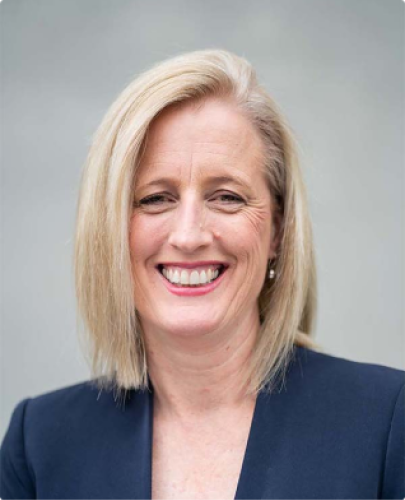
TV Interview - 7:30 Report
SENATOR THE HON KATY GALLAGHER
Minister for Finance
Minister for Women
Minister for the Public Service
Minister for Government Services
Senator for the ACT
SARAH FERGUSON, HOST: Katy Gallagher, welcome to 7.30.
KATY GALLAGHER, MINSTER FOR FINANCE: Thanks for having me.
FERGUSON: The government's facing a considerable backlash over your proposed changes to capital gains tax. Can you first clarify which businesses will be subject to this new regime?
GALLAGHER: Well, the changes to capital gains tax are broad-based, so they're across all assets, and you know the reason we're doing this If I can start really with the approach the budget's taken, it's doing a number of things. One, we're trying to rebalance the tax system that allows us to give tax cuts to 13 million working Australians, reform the capital gains tax so it returns to its original scheme, which is taxing real gains, reforming negative gearing so that we can get more young people into housing and deal with the housing shortage and some of the intersections between housing policy and tax policy. But we're also looking at how we can support small business - there's three and a half billion dollars worth of tax measures in this budget to ensure that we are supporting small business as well. But the overarching message is we're trying to essentially bring back into a more fairer way, a balance between the tax arrangements on your wage income and tax arrangements as they exist for other assets.
FERGUSON: Yes, and I appreciate we're going to talk about the fact that you've included shares and other non-property assets in these changes, but I want to stay with where the principal backlash is, which is around what this will do to businesses in Australia. So I understand that small businesses, those businesses who generate revenue under $2 million a year, are exempt from these changes, but most of the business activity in Australia is generated in bigger companies. Those companies over $2 million in revenue, is your new policy a disincentive for those businesses to grow?
GALLAGHER: Absolutely not. And I just outlined we had three and a half billion dollars worth of tax measures to support the growth and investment in our small business community, and 90% of small businesses, in relation to some of the concerns that have been raised, particularly in relation to trusts and how they manage, would not be affected. The existing generous arrangements around capital gains tax for most small businesses again won't be affected. And so I think there is a level of misinformation around how some of these changes will impact, and that's over to us to explain that. But I think the changes overall really are about better aligning, as I said, wage income and the tax arrangements there with other assets and the taxation of those across the economy.
FERGUSON: Now you have accepted already, and it's written into the Budget papers, that you are consulting with the tech and start-up sectors. But why is a tech company any different from another business trying to grow in Australia?
GALLAGHER: Well, they have some unique arrangements, particularly as start-ups having a very low-cost base or low costs associated with their establishment. So we want to understand the impact of that a little bit more in consultation with them, and we've been clear to them about that. We've been clear in the Budget papers, and those discussions really couldn't be finalised or reach a final conclusion until the Budget was released.
FERGUSON: Let me just come in there, because I'm not sure that makes sense, that you couldn't have those discussions beforehand. But you haven't described why you should do a carve-out for one particular sector. There are lots of businesses in Australia that have very low capital when they start up, so why create at least a two-tier system where one section of business activity gets treated better than the others?
GALLAGHER: Well, I mean, that's not what I'm saying, Sarah. What we've outlined in the Budget is that we want to talk further with that sector about some unique features of their industry, and I think that's a responsible thing to do. We had some of those, or the Treasurer had some of those discussions earlier, but those can proceed now with the arrangements that we've outlined in the budget.
FERGUSON: What you haven't outlined, however, is why they are different. Why do they specifically deserve to be carved out? It's always messy when you carve out one sector of business activity. Why is it that the tech sector and the start-up sector is so different that it deserves a better or different tax treatment than other parts of the business economy?
GALLAGHER: Well, the government hasn't taken a position on carve-outs. What we've said is that we want to work with that sector to understand a little bit more about the concerns they are raising, and it's particularly about some of the costs that they, you know, the way that their business is structured, particularly when start. When they are early, young businesses, that we want to work through that with them further and the Treasurer has undertaken to do that, and it's clear in the Budget papers.
FERGUSON: I guess what I'm trying to understand is what's the difference between another business, say a medical research company that has low capital costs at the beginning. But let me put the question to you in a different way. Former Rudd government adviser Lachlan Harris says the changes you have made should be reversed and only apply to residential housing. Can you accept the advice of a friend to Labor that you should rethink these changes?
GALLAGHER: Well, part of the reason that we're trying to deal with these reforms and have put these reforms forward is to remove some of the distortions that we've seen in the way that the capital gains tax arrangements have operated. When you look at it over the last 20 years, you can see very clearly that it's overcompensated for investing in established properties, and that's had an impact on the housing market, which is another thing this budget seeks to do, is to rebalance that so young people get a fair go. And it's undercompensated in other areas. But if you were to, you know, and we're getting a lot of free advice at the moment, but part of what we're trying to do here is remove distortions, not create new ones.
FERGUSON: In the Budget papers, Treasury says that the current capital gains tax doesn't tax high-growth businesses enough. Don't we want high-growth businesses to be incentivised and succeed in Australia, which doesn't come through higher taxing?
GALLAGHER: Well, we absolutely want to make sure high-growth businesses are successful in Australia, but what we are doing here is looking at how our tax arrangements work across the board. We think that where we've got tax arrangements that treat working income, wage income, differently to how it's treated in other assets, that we should respond to that and make it a fairer, more neutral arrangement, and that's what we're seeking to do across the board. When you look at all of the reforms, negative gearing, capital gains tax, and some of the reforms that we've announced in relation to trusts.
FERGUSON: There's a lot of people who were supportive of the idea of changes to capital gains tax as it relates particularly to housing, and I'm thinking here of some of the Teal independents who have very wealthy electorates, but they are asking you to ringfence housing and pause on these other changes. Are you prepared to listen to that advice, to think about that, to reverse course?
GALLAGHER: Well, the decisions we've made are outlined in the budget, and we will be proceeding with those with legislation in the next several sitting weeks. And again, I go back to my earlier answer, the changes we are making, we are seeking to ensure that people, in relation to capital gains, are taxed on their real gains adjusted for inflation, and that we are removing the distortion that has existed in the tax system in this area for decades now, which has distorted the investment in fixed property or established property, and returning that back to the original intention, which is to tax on real gains and to remove that distortion. And, you know, some of the advice about you can only do it to this bit and not to that bit does not remove distortions in the tax system.
FERGUSON: First of all, to be clear, when will you bring these changes to the parliament to be legislated, and would you accept the advice that you should take a pause and consider a Senate inquiry?
GALLAGHER: Well, there's been a Senate inquiry. There's a select committee that looked specifically into this issue. They have reported. That was chaired by Senator Nick McKim. There has been extensive opportunity for submissions, and the government obviously watched that inquiry. My understanding is that the legislation would be brought forward in the next sittings of the parliament, and we would want to pass those bills as soon as reasonably able to. I mean, obviously it's got to go through both houses, and that will provide certainty to people going forward about the tax arrangements.
FERGUSON: But even if you get a very clear signal from business that these changes will hurt them, there's no turning back for this government?
GALLAGHER: Well, look, again Sarah, if I go back, this budget has a lot in it for business, including the instant asset write-off, the loss carry-back, investments around simplification, all of those arrangements, three and a half billion dollars. And we have done that because we want to invest in small business, and that's part of the budget as well. These changes, you have to look at them as a package: negative gearing, capital gains tax, and the reforms to trusts, to make sure that we are removing some of the distortions, that young people are able to buy a house and buy an established house if they want to. If people want to continue negative gearing, they can do so in new housing, where it contributes to supply. All people are grandfathered. The transition arrangements have sought to take care of people's existing investments and decisions they've been taking. But going forward, having a better balance between wage income and income on other assets.
FERGUSON: Katy Gallagher, thank you very much indeed for joining us. I appreciate you coming in. Thank you.
GALLAGHER: Thank you.