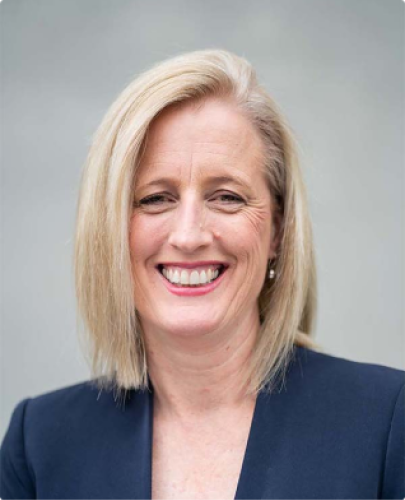
Radio Interview - ABC Canberra Breakfast
SENATOR THE HON KATY GALLAGHER
Minister for Finance
Minister for Women
Minister for the Public Service
Minister for Government Services
Senator for the ACT
ROSS SOLLY, HOST: So yesterday, of course, there were big changes announced to the NDIS. Yes, we knew they were coming, but a lot of people who have been watching this very closely have said that they were quite surprised about the extent of the changes, the level of difference there will be now for people in Australia with disabilities. Katy Gallagher, of course, is the Minister for Finance. She's also Labor Senator here in the ACT, and she joins me in the studio this morning. Katy Gallagher, thanks for coming in.
KATY GALLAGHER, MINISTER FOR FINANCE: Thanks for having me, Ross.
SOLLY: So, I sort of did one of those loose breakfast polls that I do occasionally, just to get the feeling for what the listener thinks. Because, as you know, Katy Gallagher, over many, many years, the breakfast listeners are pretty switched on. And I just asked a simple question: do you think the changes are fair? And I guess you'd take this as a win. It's a 50/50, 49% so far say yes, 51% say no. Are they fair?
GALLAGHER: Well, we think these are the changes required to ensure the sustainability of the NDIS into the long term. That's the reality of the decisions, that's been guiding the decisions that the government's taken on these. The scheme is growing and has grown into something much bigger than what was originally intended when all governments signed up to the NDIS. We've put in some controls in our first term to try and manage the scheme growth. But it's clear from the latest actuary report that that wasn't enough, and it wasn't going to control those costs to a manageable level. I mean, when you have the largest social program in government growing at about 10% per annum, that really is unsustainable growth.
SOLLY: But are we in danger, and are you in danger of getting so fixated on the dollars and forgetting that there are real people here involved in this?
GALLAGHER: Not at all. All of our decision-making has been going on how do we ensure that we protect the NDIS and make sure it's there for all of the people that require it? You know, when it started, it was for people with permanent and profound disability. Thirteen years on, it's quite a different scheme. It was originally intended to be about $13 billion fully rolled out, with about 440,000 people on the scheme when it was fully rolled out. You know, it's now 760,000 people on the scheme, and over $50 billion a year. So it's actually quite different from what I remember, because I was Chief when we signed up to it.
SOLLY: These are all still people though.
GALLAGHER: Of course, and that part of the work that we have to do is make sure that the service system that existed before the NDIS is rebuilt in some capacity. What has happened is the NDIS has become the only place you can go if you need extra support.
SOLLY: I think, as Bill Shorten calls it, the only life raft in the ocean.
GALLAGHER: Exactly. And so all of the services, I used to work in them before politics; I worked in the disability sector. All of those services that used to exist have essentially been consumed into the NDIS and the government. These are hard decisions. I think Mark went through that yesterday and a lot more work to be done, but we believe these are the changes that are required to rein in the costs so it is manageable, and make sure that we've got it on a sustainable footing into the long term.
SOLLY: So 160,000 people apparently, that's the figure that's been bandied about, will no longer qualify for the NDIS. Who are these people?
GALLAGHER: So part of the first stage, Mark will bring a bill into the Parliament in the budget week that will essentially go back to what was originally intended, which is to have a definition of basically functional capacity as your determinant of access to the scheme. That will guide access or decisions about people coming into the scheme, and people on the scheme now, and what support they get. What happened in the early days of the NDIS was there were called access lists, which sort of meant a guide in the early stages.
SOLLY: Box ticking.
GALLAGHER: Well whilst functional capacity was resolved, that was kind of how you got onto the scheme. What's happened is if you get a medical diagnosis now of a particular type, you will get access to the scheme. This tries to shift that a little bit. So for people with higher functional that will be guided by an expert technical group to provide advice to the government about how that is managed. I think we're trying to be upfront with people about some of the changes that need to come in. We need to moderate plan growth and some of the reviews that have been happening and look at access to the scheme and build services on the outside.
SOLLY: This will require all participants to be reassessed?
GALLAGHER: Yes, and that's currently available to the NDIS in the NDIA now; that was always a thing that you have and many people get reassessments. In fact, we're trying to respond to that as well. I think it's about one in five have a plan reassessment, and when that reassessment happens or is finalised, it usually means the plan is increased quite considerably, and we're trying to manage that as well.
SOLLY: Some of the reports I've read this morning are suggesting that a lot of the 160,000 will be people with autism, mild autism, those sorts of diagnosis. Would you expect that would be where most of the people who were on the NDIS will now find themselves needing some other sort of support?
GALLAGHER: Well, it may be if they are considered in that higher functional capacity. If we go back again to what the NDIS was planned around, it was about permanent and profound disability. So part of what we're trying to do here and we're trying to do it with children as well through thriving kids, is provide an alternative to those communities to say we get that you need some help or additional help, but the NDIS is not the only place that can provide that. And part of that work, and we'll have to do it with the states and territories, is build the service system outside of the NDIS.
SOLLY: And I'll talk a bit more about the role of the ACT Government next. Stephen asks you a question: who is going to reassess these existing NDIS patients? Will it be a computer, or will it be a doctor? Do you know?
GALLAGHER: Well, there's a process now through the NDIS. So it's done through the National Disability Insurance Agency. Plan reassessments, that's a pretty significant part of their role.
SOLLY: Is it fit for purpose. Is it working okay? Because obviously there's people who maybe are getting through that shouldn't be getting through, and people who have been misdiagnosed.
GALLAGHER: Well, this is part of what we're trying to deal with, and part of that is essentially making sure the NDIA has the tools as well, which is why we need to shift from access lists and sort of diagnosis-based access into functional capacity. So what are your needs and how are you classified? To have such a disability that you require a lot of support, in which case the NDIS is your service response. But for those outside or who don't fit that criteria, then the service system needs to exist outside the NDIS. So it's primarily, in short, a job for the NDIA, but it is informed by experts.
SOLLY: Bill Shorten, I spoke to him earlier this morning, he was pretty supportive of the changes announced yesterday and understood the reasons why they've been introduced but he did say he was a little bit concerned about the cutbacks to community and social network programs, because he said that's an essential service for some people to get out and be able to mix in the community. Is he right to be concerned about that? Are you worried that there are going to be people who suddenly are not going to be able to have that essential mix with the community?
GALLAGHER: So, part of the reason the NDIS was built was essentially around inclusion and participation, and so it is an important part of the scheme. We have gone through and looked at all parts of the scheme to see where the cost pressures that are leading to these increased expenses for the scheme are happening. In that part of the scheme, so this is not your sort of need for personal care or disability support in that regard, but in relation to community participation and social participation. That's grown in the last five years from $4 billion a year to $12 billion a year. That's heading towards what we spend on the PBS across the country.
SOLLY: But that doesn't mean it's not important.
GALLAGHER: I'm not saying it's not important. I'm saying it is growing faster than is sustainable. And so, again, we have to look at that. If we do nothing it will continue to grow towards $20 billion a year and that on its own is unsustainable. That's just on that part of the scheme. So, what it means for individual participants? A few years ago, about $14,000 per participant was spent on community access. It's now about $31,000 of a participant's plan. It's heading towards $33,000. I think this would bring it down to about $26,000.
It's not that people will not get that support but we are saying we have to manage the growth of that and put some pressure on it, because otherwise it is going to get away from us and it will endanger any expenditure on the scheme. We know the social licence for the NDIS is waning because people are seeing kind of how fast the scheme is growing and we've all heard anecdotal stories of what people think is right and fair. This is about making sure people who need the scheme get the support they need through the scheme, but it's manageable in terms of how much we spend on it as a social program.
SOLLY: Christina Ryan was on my show earlier this morning as well. And her big frustration is that she feels people with disabilities aren't actually part of the conversation. They're not being listened to. These are decisions made by people like Mark Butler and yourself and others. Is she right to feel frustrated that their concerns, their worries are not being listened to?
GALLAGHER: Well, I think the design of the NDIS, the kind of short history of the NDIS, has been very much a partnership between the disability community and governments around how the scheme is managed, scheme design, and a lot of consultation over it. It is fair to say this first bill that we bring forward is the government's response to managing the immediate pressures on the scheme to manage those costs. But the bigger piece of work here, about how we essentially manage things like functional capacity, how we transition essentially to a reset scheme, how we build the system outside the NDIS, all of that will be heavily consulted upon with the disability community.
I think I heard Christina saying there's been a lot of changes over the period of the NDIS. I agree with that, because the scheme has changed to what was originally intended, and we've been trying to deal with that, just as the disability community and the market that's been created around the NDIS has changed as well.
SOLLY: Well, I guess the community just want to know, Katy Gallagher, that in five years' time, or even in two years' time, that the system is still going to be there for them, and it's still going to be better for them, it's still going to make their lives better,
GALLGHER: Absolutely.
SOLLY: And is it? Can you guarantee that?
GALLAGHER: Yes. And I would say if we don't do these things that in five years' time we would be challenged, because the social licence would continue to wane. It would mean other areas of government couldn't get funding. When you look at the cost of Medicare, it would exceed that. It would exceed Medicare and the PBS together. I mean, you know, these are the difficult kind of decisions that the government is facing.
I would say it would be better, because we are going to rebuild a system that has disappeared. If you have a child who has some support needs, but not significant, but you're needing help at the moment, it's a one-way ticket to the NDIS. I felt that as a parent, I've been referred there about 10 times when I'm going, well, I don't actually need the NDIS, but I do need some help. And that system, unless you've got a capacity to pay in the private sector and for all of the different interventions, that doesn't exist, and that's not right.
SOLLY: So, in your personal situation, under these changes, will, you know, do you think you will no longer qualify in your family situation?
GALLAGHER: Well, I've chosen not to go down the NDIS path because for a number of different reasons. But I felt that it wasn't the right. My daughter didn't require entry to a scheme that she could probably never get off if, you know, like it's a one-way ticket. And I wanted, and I think I've spoken to other parents that need early intervention. They need a bit of community life skills. They need kind of one-off, at transition points in someone's life, some help.
The system that existed before the NDIS, that wasn't perfect. I accept that, but some of that has disappeared. And so unless you have money to pay outside the NDIS, your choices are very limited. And what we're trying to do is keep the NDIS for those that the NDIS is intended for, and then for people like my daughter, that there is a service system outside that parents can access from time to time if they need it. And that's what we've got to rebuild. And I guess a lot of that will now fall onto the states and territories.
SOLLY: And in a moment, we'll go to Suzanne Orr who's the minister. But what is the role now for the states, for the ACT Government, Katy Gallagher, and are you confident that they will step up to the plate here?
GALLAGHER: Well, I am very hopeful, because the NDIS has been a partnership from the beginning. Again, I was Chief Minister when we signed on all those years ago; it's been a partnership ever since. The states and territories have the same cost pressures on their budget and the same demands for growth in other areas, whether it be health or municipal services here in the ACT, housing, all of those areas. So budgets are trying to do more, and managing exposures to big, sharp increases in the NDIS is something that affects territory budget here as well. I think there is both a shared interest on that side, but also to build the system that is right for the ACT community and has those choices available for parents.
SOLLY: Just a couple of other things because we are going to run short of time. But the other announcement yesterday was about the private health rebate for those over 65. This is obviously a bit distressing for elderly Australians as well. Are you not concerned, Katy Gallagher and you've been a Health Minister, that this is just going to see more elderly Australians, whose health expenses are quite often a lot more expensive than younger Australians, that they're just going to abandon private health now and go on to the public system?
GALLAGHER: So what we're trying to do there, and what you'll see when the budget's released, we're trying to bring an intergenerational lens to the budget as well. Like, how do we make sure that the economy works for everybody? And there is this anomaly that was brought in by John Howard, where older Australians get a higher rebate for their private health insurance than younger Australians. I think in these times when the budget's under pressure, where we've got big demands on the aged care side, where any money that is raised from this change is being put into aged care, so more effort into the area where we're seeing much greater demand.
SOLLY: I understand all of that, but I'm just wondering whether you think that this might lead to older Australians going off private health altogether now and putting more strain on the public health system.
GALLAGHER: Look, that's not the information that we have about this. This is essentially a modest change that says to everybody, regardless of your age, because these are based on incomes the rate of the rebate. For two households, different age but on same income, you will have the same rebate for your private health insurance. If you're over 65, you will no longer get that additional rebate. And we think that's not only fair, it helps us pay for the big increases and about $3 billion that will go in this budget alone into extra services in aged care.
SOLLY: Couple of very quick ones. Is a tax on gas exports totally off the table?
GALLAGHER: Our budget will be announced May the 12th. I think the PM and others have been clear our focus at the moment has really been on making sure we've had enough fuel coming in, in terms of the crisis we're seeing in the Middle East and working with international partners around that.
SOLLY: So, it’s off the table?
GALLAGHER: Well, you'll see the budget on the 12th of May, but the PM's priority is to make sure we're securing enough fuel for the country.
SOLLY: Yeah but also making sure the bottom line is healthy and this would add a lot to the bottom line.
GALLAGHER: I know there's an inquiry underway. We supported that Senate inquiry. I've seen over the last couple of days just snippets of people very supportive and those that are very against. You know, government has to be mindful of a whole range of pressures when we're making our decisions. You'll see our budget on the 12th of May.
SOLLY: Have public servants got anything to fear this morning? Melissa Donnelly said everyone's nervous. They think they're going to lose their jobs.
GALLAGHER: Well, we've rebuilt the public service. We think it's roughly around the right size. There'll be ons and offs across different departments. We've dealt with a lot of the lack of capability that we inherited when we came to government. We're committed to ensuring the public service is an enduring institution, and I look forward to working with the CPSU.
SOLLY: Sadly, we are out of time. Katy Gallagher, appreciate your time this morning. Thank you.
GALLAGHER: Thanks very much, Ross.