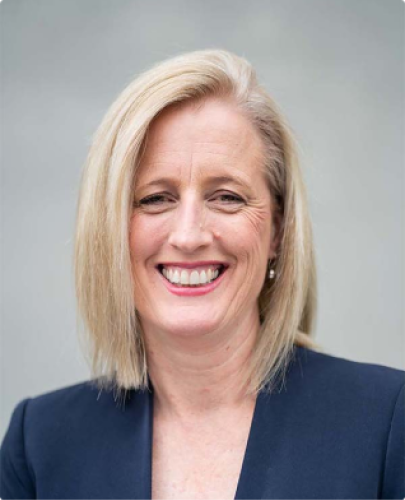
Radio Interview - ABC Canberra Breakfast
SENATOR THE HON KATY GALLAGHER
Minister for Finance
Minister for Women
Minister for the Public Service
Minister for Government Services
Senator for the ACT
ROSS SOLLY, HOST: Well, the Finance Minister is ACT Senator Katy Gallagher, and she joins us this morning. Katy Gallagher, good morning to you.
KATY GALLAGHER, SENATOR FOR THE AUSTRALIAN CAPITAL TERRITORY: Good morning, Ross.
SOLLY: What do you think? What was the Prime Minister trying to do? What was behind his decision last night to have a national address?
GALLAGHER:Well, I think a lot has happened since the conflict in the Middle East started. So, you know, that's over five weeks ago now, and I think this was post-National Cabinet, where a number of decisions were being made around fuel supply and a fuel supply plan, to inform the nation in a very clear and consistent way about all of that and make sure people have the information straight from the Prime Minister.
There's a lot of misinformation, as you know, that goes around all the time, so it was about trying to pull that all together and provide it to the nation in a very respectful way.
SOLLY: Yeah, I'm sure you've seen the responses today. A lot of the newspapers are very, very critical, they thought it was a waste of time. They thought it was just a party political message. There were also some suggestions that, in fact, it would have had the opposite effect and created some panic. I mean, do you think it's fair for people to describe it as underwhelming?
GALLAGHER:Well, we kind of leave the commentary to the commentators. The Prime Minister's job is to act in the national interest, and addressing the nation is part of that, as was chairing National Cabinet, as is chairing the National Security Committee frequently, as is making all the decisions.
Look, we don't usually have newspapers that are cheer squads for this government. We work with that every single day. The Prime Minister's job is to make decisions in the national interest, and an address to the nation is part of that.
And really, it was to say to everyone that there is a job for all of us here in terms of using as much fuel as we need, but nothing more. We've seen some of that over the last few weeks, where people have been, understandably, cause they are concerned taking more petrol than they need. It's about making sure people understand that there are many Australians out there who aren’t in a position to look at alternative ways to conserve fuel and need it as well.
SOLLY: Are you worried, though, that it might have had the opposite effect last night and could prompt a little bit of panic? I mean, it's unusual. It doesn't happen all that often for the Prime Minister to have an address to the nation. It was across all the television stations, across all the radio stations. It was a moment. And it could have the effect that people go, wow, if the Prime Minister is taking time out to address us, there must be something we need to get our heads around.
GALLAGHER: Well, again, I think the level of uncertainty that we're seeing at the moment is understandable. We've got the worst oil shock in decades, some are saying 50 years. People are seeing that at the bowser, they’re hearing it on the news.
There is a responsibility for the Prime Minister, who took it, not only last night in the national address, but in every decision and meeting he has had since this started, to provide information to the public in a calm, clear and consistent way. I think he did that last night.
I know there will be views about it, and some of your callers I’ve been listening to this morning are pointing, damned if you do, damned if you don’t. This is one part of probably over 100 decisions the PM has made in recent days about how to manage some of the consequences of a war that wasn’t of our making, but is having consequences right here at home.
And, you know, prior to Easter, trying to provide people with information as they head out on their holidays.
SOLLY: At the moment, we haven’t had to do anything too drastic. But do you think, you know, there are reports this morning, the Financial Review reporting that energy analysts are expecting there will have to be restrictions on fuel, probably post-Easter. Is it inevitable, Katy Gallagher, do you think there may have to be odds and evens, that sort of thing happening?
GALLAGHER: Well, the fuel security plan that National Cabinet agreed to sets out four stages of ensuring we are managing this kind of supply shock that’s working its way through the economy. We’re at level two now, which is keeping Australia moving.
Then it goes to levels three and four, which talk about taking targeted action, and then at level four, protecting critical services for all Australians.
SOLLY: So what has to happen to trigger level three?
GALLAGHER: This detail will be subject, and I think in the plan it says that, to further discussions between the states and territories and the Commonwealth, but you wouldn’t be in the situation we’re in now where we have –
SOLLY: Do you have a measurement, though? That will signal that it’s time to go to level three? Is there a stage we’ve got to reach to suddenly bring in level three?
GALLAGHER: Well, the detail of that is in the fuel security plan. I don’t have it right in front of me right now, but it goes through that at a high level and will be worked through, that’s the whole point.
SOLLY: Yeah, I get that. I’ve read a bit about the plan, maybe I’m missing something, and I can’t quite see what the trigger level is to move to level three and then to level four. But there is a trigger level there somewhere, is there?
GALLAGHER: Well, yes, there will be. There will have to be a decision taken to move from level two to level three, and then from level three to level four, and we would do that in conjunction with the states and territories.
At the moment, there is enough fuel, and fuel is arriving as expected into the country. It’s higher cost because of the impacts of the war, but the fuel is arriving and our minimum stock holdings, the reserves, are sufficient to stay at level two.
Now if that changes over the next few weeks, then decisions will have to be taken about whether we move to level three, and if the situation deteriorates from there, level four.
I think the PM spoke about that last night, there’s a lot of uncertainty and the next few months may be difficult. It’s dependent on a war that’s being waged overseas that’s having ongoing impacts in terms of supplies of oil into Australia. But at the moment, the supplies are arriving as expected, but there’s pressure there as you would expect..
SOLLY: Yes, of course. Do you get the sense that the nation is underappreciating just how serious this situation is?
GALLAGHER: No, I don’t. My discussions with Canberrans, who give me their feedback frequently, people understand, they’re concerned. They want the war to end, which all of us do, and I think they very much understand the seriousness of it.
SOLLY: Who knows, maybe the midday announcement from President Trump will be an ending of the war, or it could just be an update on what he’s doing with his ballroom, who know? We’ll all watch that with interest, and then we’ll watch the Prime Minister at the Press Club. What time does that happen? Do you know, Katy Gallagher, off the top of your head?
GALLAGHER:Usually the address starts at 12:30, the broadcast would start at 12:30.
SOLLY: Alright, fascinating. It’ll be interesting to hear what comes out of that. Really appreciate your time this morning, Senator Gallagher. I hope you get a rest over Easter, you and your family. Thanks for your time.
GALLAGHER:Thanks, Ross, and to you and your listeners as well. I hope everyone has a nice break.
SOLLY: Good stuff. Senator Katy Gallagher there, the Finance Minister on ABC Canberra Breakfast.