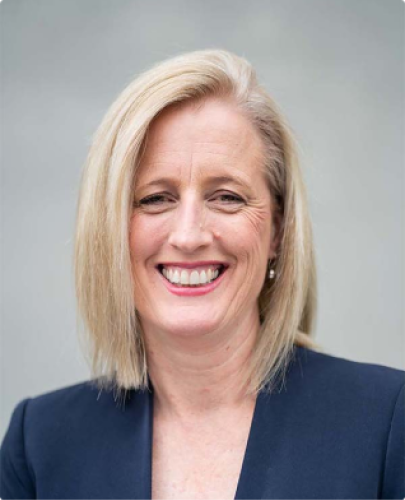
Radio Interview - RN Breakfast
SENATOR THE HON KATY GALLAGHER
Minister for Finance
Minister for Women
Minister for the Public Service
Minister for Government Services
Senator for the ACT
SALLY SARA, HOST: Here in Australia, as the Federal Government prepares its May budget, Katy Gallagher is the Minister for Finance. She joined me a short time ago. Minister, welcome back to Radio National Breakfast.
KATY GALLAGHER, FINANCE MINISTER:: Thanks for having me on, Sally.
SARA: Is the government considering any further measures to get fuel to those who need it, particularly in regional areas?
GALLAGHER: So, the government's meeting constantly, both the National Security Committee very frequently, and all our mechanisms across government. So, the National Coordination Mechanism ministers are undertaking individual kind of engagements with stakeholders. So, it's a constant monitoring situation at the moment. We feel that the measures that we have taken already will ensure that petrol and diesel get to the areas where it has seen localised disruption. So, in short, we think the steps that Minister Bowen and others have taken are adequate at the moment, but this is something that we keep a watching eye on.
SARA: How is the government preparing for a potentially prolonged conflict in the Middle East?
GALLAGHER: Well, I think we've seen in the last 12 days that the severity and the duration of this conflict will, depending on the duration in particular, have significant impacts globally. So, this is something that's constantly part of the government's thinking. We are meeting, as I said, very regularly. The Prime Minister's leading those meetings, engaging with all of our agencies, the states and territories, industry, to make sure that we are thinking about how to respond in the event that the conflict goes longer than any of us would hope. Obviously, we all hope that it ends very soon, but it's very clear from, I think, what we've seen in the last week, in particular with some of the disruption we're seeing in the Middle East, that there will be ongoing consequences, and we're working through those issues now.
SARA: So, it's in Australia's interest to try and get oil flowing again?
GALLAGHER: Well, I think it's in the world's interest to make sure that oil is flowing. And you've seen with the International Energy Agency the way that they've responded, and countries responding to the IEA's voluntary request, that countries are willing to step up and provide certainty in a very volatile and uncertain situation. So, I think all of that, those international, some of the steps we're taking here, the work that the Treasurer is doing with the ACCC, I mean we really are pulling every lever available to us right now to make sure that motorists, industry and farmers all get the supplies that they need when they need it.
SARA: You're a member of the NSC. What's the thinking, the government's thinking, why is Australia not sending a ship to the Strait of Hormuz to help get some of those oil vessels through?
GALLAGHER: Well, Australia, I mean, we make decisions in our national interest. You know, we have responded to a request from the UAE in order to provide some defensive support for them. And we will work through other requests if and when they come. I mean, the NSC makes those decisions based on national priorities and our national interest and will continue to do so.
SARA: What's the thinking of the NSC on this, of not sending a ship?
GALLAGHER: Well, I'm not going to go into what the thinking is. I think my answer remains the same. We consider requests when they come.
SARA: So, it still hasn't come?
GALLAGHER: Well, we've dealt with a request that came from the UAE and we've provided a response to that. And the NSC will continue to make its decisions based on the information before it. But I'm not in a position to go into what that may or may not be.
SARA: On other issues back home, the Capital Gains Tax Senate Committee will report back today. Will that help to shape your thinking on any capital gains changes you may make?
GALLAGHER: Well, we're in the thick of the budget discussions now, Sally. I mean, it really intensifies in March and April, as you would expect. And right across government, all the ministers are presenting their budget submissions. So, we're right in the thick of that now. We'll look at the Senate committee's report. Of course, we look at all of them. We note that there's been high engagement in it led by Senator McKim, and we will look at what that report finds. As we've said, I think the Treasurer has said on this show and others, we are interested in responding to some of the intergenerational issues around housing. Capital Gains Tax comes up as one of those issues.
SARA: Will you use the 5% efficiency drive you've been carrying out in departments and agencies to help make substantial spending cuts in this budget?
GALLAGHER: Well, savings is a big part of the work I'm doing and has been since I took on this role. So, as you know, we've found about $114 billion in savings since coming to government. There's more work to be done there, and work is underway. We've had a discussion about the 5% request. That really was a discipline, a deprioritisation exercise. It wasn't about cutting agency budgets by 5%. It was getting agencies to think through what they might deprioritise in order to invest in other areas. But we are genuinely looking for significant savings across government. We think the pressures coming to the budget for new spending are considerable, and part of that means you have to look at what your spending is already going to and how you reprioritise within that.
SARA: Should Australians prepare for a tough budget this time?
GALLAGHER: Look, I think it is a challenging budget, certainly in my experience of putting budgets together, because of the global situation we face, some of the volatility and uncertainty in the global economy, the inflation challenge, the work that we want to do in productivity, tax reform, all of that. They're all interconnected, in a sense, when the budget comes down. So, in that sense, and maybe all budgets are challenging to put together because there are thousands of decisions that are interconnected, it is challenging. But we've been saying for some time that we would look to find sensible savings where we can, and we will do that.
SARA: Is the government considering reducing or abolishing the diesel excise rebate for mining companies?
GALLAGHER: That hasn't formed part of our thinking to date. I know there's a campaign underway from different groups that are advocating for this change. I think we've made clear where we are, looking at issues around housing and intergenerational issues around housing, savings, productivity, and responding to the global uncertainty and volatility. We're seeing some of the pressures coming from the Middle East are presenting challenges in finalising the budget. But I have no doubt that we'll work through it over the next couple of months, and the budget will be handed down in May.
SARA: As Minister for Women, what's your reaction to the return to Iran of the majority of members of the women's football team from Iran who were granted visas here in Australia?
GALLAGHER: Look, you know, I think I'm the same as every other Australian watching that last week, pleased that Australia could provide support to a number of the Iranian women that chose to stay. But I understand this must be incredibly difficult individually for those women to make that decision. And I don't pretend to be able to be in their shoes at all. I have no doubt they've all made that decision for their own individual reasons. I think the important thing from my point of view was that we were able to say, if you do choose to stay, we will provide you with all the support you need. But I understand that those decisions are incredibly difficult for individuals.
SARA: The Iranian regime has been critical of Australia. Given how sensitive this issue is, would it have been preferable to do some of this in private, not with photographs with the Minister and a high-profile delivery of these visas?
GALLAGHER: Well, I think a lot of it was done very privately, a lot of it, and I remember the kind of the public interest in that story and a lot of effort being made to allow appropriate discussions to occur without any media speculation. But I think once those decisions had been made at that point in time, because of the public interest in that story, it was appropriate to be clear about what the Australian government's offering was. But we remain and have remained throughout, working individually with those women and supporting the decisions they have made, including those that have decided to return home.
SARA: Just finally, a major independent review into research and development in Australia is warning that Australia's future living standards are at risk. Is the government considering any changes in time for this year's budget on the R&D front?
GALLAGHER: So, I might leave that to the Minister for Industry, who probably will have more to say about that later today. But it's very clear that research and development is very linked to investment and some of the opportunities in the new economy. So, we will be working through those decisions and that report with the Minister, both Jim and myself.
SARA: Minister, thank you for joining me.
GALLAGHER: Thanks very much, Sally.
SARA: That's the Finance Minister there, Senator Katy Gallagher.