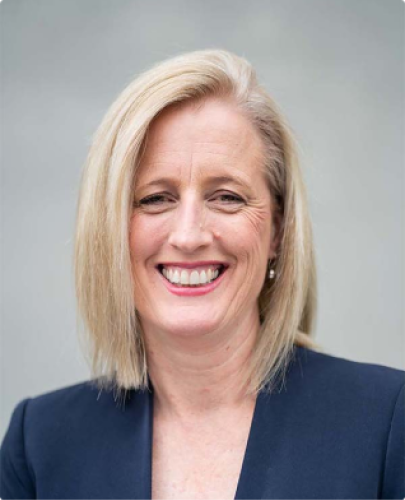
TV interview - ABC News Breakfast
SENATOR THE HON KATY GALLAGHER
Minister for Finance
Minister for Women
Minister for the Public Service
Minister for Government Services
Senator for the ACT
JAMES GLENDAY, HOST: Time to change gears now and get back to the political fall-out from the latest interest rate rise, and we're joined by the Finance Minister, Katy Gallagher, from Canberra. Minister, welcome back to the program.
SENATOR THE HON KATY GALLAGHER, MINISTER FOR FINANCE: Thanks for having me on, James.
GLENDAY: You often seem to draw the short straw when there's some difficult news about, so we do appreciate you fronting up. This rate rise is of course going to cause some pain for families, for small businesses as well. What's your message to them, where should they find the extra cash they need to make their repayments?
GALLAGHER: My message is: the government understands that the decision taken yesterday by the independent Reserve Bank will hit those homes and they're already under pressure. We understand that. So, the job for the government really is to, in the upcoming budget, is to continue to roll out some of the cost of living help that we have already rolling out. And to continue to manage, you know, the budget in a responsible way to minimise some of those pressures on households. That's what we've been doing over the last couple of years. We will continue to do that while inflation remains higher than we would like.
GLENDAY: There are predictions of at least one more rate rise, but potentially two. And there's been a lot of commentary in the past 24 hours around whether or not we would be having a different conversation this morning had your government spent less. I'm just curious, as you prepare this year's budget, are you going to be looking at some pretty substantial cuts to try to pull some of the demand out of the economy?
GALLAGHER: So, a couple of things there. I mean yesterday if you go and have a look at the Governor's statement and the statement on monetary policy, I mean, the surprise element if you like in some of the pressure on inflation, the bank does put down to an increase in private demand. And so that is the issue really that they've been grappling with in their decision. On the government side, when we look at our spending, our budget, we've found $114 billion in savings. I know I use that number a lot, but it's - it rolls off the tongue, it's actually very, very difficult to find savings of that magnitude in a budget and we've done it. We'll continue to look at areas where we can make sensible savings. But if you also look at the budget, we get a lot of free advice from political opponents and other stakeholders, I hear them on your show as well. “Just cut spending.” When you look at the budget, the large parts of the budget are the social security system and welfare payments, they're education payments, they're health payments. They're areas budget, yes, we need to continue to do so. But it's a hard job, because we want to make sure that we are managing the impact on people as well. You know, we're not going like - they're defence. They are the big components in the budget. And so, when we look at how we find savings in the to do what our political opponents always ask us to do, which is slash and burn. But looking at where we can find savings and make sure we're managing some of that pressure is really important. And it will be a key part of the budget in May.
GLENDAY: A lot of that free you talk about in the commentary pages of the financial newspapers centres around productivity and, in particular, things the government could do around tax reform and the advice like. Given you pretty much don’t have a functional opposition at the moment, I mean the Coalition has imploded, One Nation is not known for serious economic policy, is now the time for your government to be brave tackle really tricky tax reform?
GALLAGHER: So, I think you’ve heard the Treasurer say when we're looking at the budget together, there's a number of things we're looking at. So, it’s managing inflation, dealing with the productivity challenge. We've seen slight improvements in some of the recent economic data but that's a long-term challenge, right. Productivity hasn’t been what we would like for the last two decades. We've got some effort going in there, whether it be in clean energy, digital, data, skills, housing – those areas, that work is under way. And then looking for the third component which the Treasurer has talked about, is reform. So, we had the Economic Reform Roundtable, some ideas have come through that. You can imagine that that will feed into our budget considerations in May. We've got quite a number - if you look at the tax system, we've got the tax cuts coming, we've got instant deductions that we committed to at the election, we’ve got better targeted super reforms that we'll need to get through the Parliament. So, we have some of that reform work underway already. But, you know, we will look at some of the ideas that came out from that Economic Reform Roundtable in the considerations we have in May for the budget.
GLENDAY: Before I let you go, I want to be really specific then. House prices are very, very high. A lot of demand is being driven by housing investors, predominantly pretty wealthy housing investors. They benefit when they sell their properties because of the capital gains discount. It makes investing especially lucrative. Is that something your government is going to finally target?
GALLAGHER: Well our policies on housing haven’t changed, James. We're focused on the supply side. We have said we do see there's an intergenerational issue in the housing market. We’ve said that publicly. We're targeting a lot of our effort into driving housing supply.
GLENDAY: Might your policies change in the next couple of months ahead of the budget?
GALLAGHER: Look, as I said, we've got those three areas we're focusing on. I can't give you any more information that, James. We're looking at how we manage inflation, the productivity challenge, and of course economic reform which is featured as part of our every budget we put together and will feature as part of May.
GLENDAY: We do appreciate your time on the show.
Media contact: Gallagher.Media@finance.gov.au