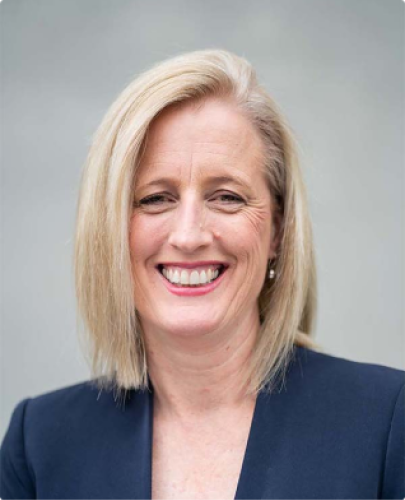
Radio interview - ABC RN Breakfast
SENATOR THE HON KATY GALLAGHER
Minister for Finance
Minister for Women
Minister for the Public Service
Minister for Government Services
Senator for the ACT
SALLY SARA, HOST: As you've heard there, the Reserve Bank has increased the cash rate to 3.85%, it’s the first rate rise in more than two years. It's also forecasting underlying inflation to peak at 3.7% in the middle of the year. Key businesses have called for more disciplined government spending to help rein in inflation. Senator Katy Gallagher is the Minister for Finance and joins me again in our Parliament House studio. Minister, welcome back to Breakfast.
SENATOR THE HON KATY GALLAGHER, MINISTER FOR FINANCE: Thanks for having me on.
HOST: What's your message to households with mortgages this morning?
GALLAGHER: Well, we understand that the decision of the bank is going to place those households with mortgages under pressure. And the job for the government is to continue to manage the budget responsibly, to look at how we roll out our cost-of-living relief to help those households with the pressure they're under, and we have a tax cut coming in July, we have another one the year after. Our programs in health, in medicines, in bulk billing, all of those programs are designed support households who are feeling the pressure from inflation remaining a bit higher than we'd like.
HOST: Why has the government been unable to prevent inflation increasing again?
GALLAGHER: Well, our job, I mean, the bank has their job and that's to manage inflation within the band and to concentrate on full employment. And our job is to manage the budget responsibly, to work alongside the bank. And we've been doing that in the last few budgets since we've come to government, and we will continue to do so. We've found $114 billion in savings across a number of our budgets. There's more work to do there. We know that. Jim and I, we're already pretty deep in the budget process for May. And we have to find more savings and we will, but we've done that at every budget or every budget update. But at the same time, we've also got to make sure that we are investing where we need to in government programs. And when you look at how the budget's carved up, because I know there's a lot of comment, including from our political opponents and from other stakeholders: “well just stop spending, just cut the budget”. And when you look at how the budget is designed, the vast majority of expenditure is in social services, it's in defence, it's in health, it's in education. These are the big components of the budget. We're not in the world of just slashing and burning. Where we find savings, we want them to be responsible savings, and we want to shield people from some of the pain that would come from cuts that weren't targeted or thought through. So, yes, we have more work to do. But finding savings in a budget where the demands being placed on it are greater and coming at us faster and increasing all the time is a hard piece of work.
HOST: Are you comfortable with public spending being more than 27% of the economy? That's the highest level outside the two COVID years.
GALLAGHER: Well I guess I go back to the comments I just made. We are mindful of the role of government, of public spending in the economy. We've been responsible about the decisions we've taken. We've found $114 billion in savings. I know it rolls off the tongue, but that is much more than any government that I can recall.
HOST: But public spending remains very high.
GALLAGHER: We've had to deal with pressures in defence, we've got pressures in health, we've got pressures in aged care, we've got pressures in NDIS. And in all of those areas, we are delivering reform. Like if you take NDIS alone, it was growing at 22% when we came to government. We're getting it down to 8%.
HOST: But there’s spending elsewhere in some areas, isn't there?
GALLAGHER: Well, I'm talking about the large parts and where we've got like, increasing pressure in defence. Yes, we're having to spend more in defence because of, the world we're living in and some of the decisions we've taken in that area. In healthcare, in aged care, we've made reforms to introduce co-contributions. Not easy. No government's done it before, but that's mindful of some of the pressures we're under from those big programs. But we have more to do Sally.
HOST: Where are the areas that there is room for further cutting?
GALLAGHER: Well, I think it's part of what we need to do is manage those big programs where they're growing too fast. And we're doing that. So, NDIS, aged care. But there's other areas where, you know, as Finance Minister, I look at all these programs and think what's happening there and how do we get some of the growth or the increasing pressure down? But we look across the board. We were criticised last year when we went through a 5% exercise where we asked departments, go through and have a look at your lowest priority 5%. Well, I can tell you we were roundly criticised by almost every politician in the building about doing that.
HOST: Has that delivered savings?
GALLAGHER: We'll consider some of the ideas that Ministers put forward in the budget context. Not all of them, but some of them are worthy of further examination.
HOST: In the wake of the Productivity Roundtable last year, when are we going to see the government's efforts to boost productivity making a difference?
GALLAGHER: Well, I think you've heard the Treasurer talk about this. Productivity hasn't been what we wanted for the last two decades. We can't turn it around overnight. But we have a lot of effort going into those areas, like whether it be in skills, in housing, in clean energy, in digital and data and the use of AI and all of those areas where we have pieces of work or measures underway or Ministers working on it. So, it is a longer-term challenge, but it's an important one. The Treasurer, following the election, outlined it as one of our key priorities alongside managing inflation, was making sure we were focused on productivity and driving productivity growth across the economy, and that will inform some of the budget decisions we take as well.
HOST: This is the second term for the government. Is there any data, any evidence that you've made a difference there in productivity as yet?
GALLAGHER: Well, I think the last two quarters saw a slight uptick in some of the productivity data.
HOST: But not enough.
GALLAGHER: Well, heading in the right direction. You have a government that's focused on it, we have an Opposition that's tearing itself apart. You have a government that is focused on the real issues for the Australian people and that is focusing on these challenges in the economy and making responsible decisions when it comes to the budget so that, yes, we find savings. Again, when on any measure you look at, when we came to government, we've reduced the deficits, we've delivered two surpluses, we've found savings, we've lowered the debt, we've lowered the interest on that debt. These are all pieces of work that have to continue. I'm not saying the job is done, but a lot of effort has been put into righting the budget and getting it in much better shape to deal with what we need to do over the next couple of years.
HOST: If we're talking about political capital, you're in your second term, given the election result and as you've been describing, an Opposition which is tearing itself apart, in your words, is there an appetite for some serious economic reform in this second term? Is now the time?
GALLAGHER: Well, we're actioning, and the Treasurer is leading this work, all of the ideas that came out of the economic roundtable. That's why we held an Economic Reform Roundtable as one of the first things we did on coming back to government. There was a range of ideas that came through that, and as you would expect, and I've heard the Treasurer and the PM say this in recent days, around reform, that is part of our thinking in the budget process as well.
HOST: Big, meaty tax reform?
GALLAGHER: Well, as I said, we’re not thick in it, we're at the kind of, before we get to the really intense period of budget formulation. But looking at productivity, managing the inflation challenge and looking at reform features as part of our thinking. In tax reform we've got those tax cuts coming, we've got the standard deduction, we've got the better targeted super reforms coming through. So, there's a range of work already underway. But, yeah, more to do.
HOST: Is the government expecting further interest rate rises from the Reserve Bank will be necessary to get inflation back under control?
GALLAGHER: Well, all I can do there, I mean, and I heard Carrington in your introduction, you know, the Reserve Bank, that's their job, to make decisions about interest rates. They've released their statement on monetary policy. It goes through some of that. It's not for us to determine. Our job is to make sure that the decisions we take don't make their job harder. We've, as I've said a few times, we are looking at how we can manage some of the pressures on the spending side, including looking for savings to go alongside the $114 billion we've already found, there's more work to do.
HOST: Minister, thank you for joining me this morning.
GALLAGHER: Thanks very much, Sally.
Media contact: Gallagher.Media@finance.gov.au