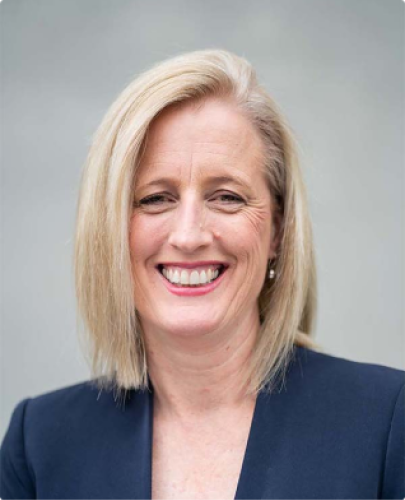
Radio Interview - ABC Breakfast
SENATOR THE HON KATY GALLAGHER
Minister for Finance
Minister for Women
Minister for the Public Service
Minister for Government Services
Senator for the ACT
ROSS SOLLY, HOST: Yesterday, the Treasurer and the Finance Minister released a mid-year economic statement. Gave us a bit of a snapshot of where we are at this time of the year. There was lots of good news, actually, in there for the ACT, lots of money for our institutions. Katy Gallagher is the Finance Minister and joins us on the show this morning. Katy Gallagher, good morning to you. Can I start though, before we talk about the review, about Josh Frydenberg's comments yesterday and basically saying that Anthony Albanese and his government were personally responsible for what we saw on Sunday night. How do you respond to that?
SENATOR THE HON KATY GALLAGHER, MINISTER FOR FINANCE: Look, I think you know, I didn't see all of Josh Frydenberg's comments, but I mean, I don't think anyone would doubt the pain and grief that was shining through those comments and reflective of a community in mourning, the Jewish community who have been so terribly affected by this evil act of terror that occurred on Sunday night. So, you know, I don't want to get into a political sparring match with him on that. I mean, that's the way I interpreted those comments. The job of the government is to support the community through the recovery, to keep doing the work we've been doing on antisemitism, to work with our national security agencies over the response, the NSC has been meeting daily like there's a huge amount of you know, obviously work, and the PM has been working around the clock on all of that.
SOLLY: So if that's the case, why? Because it's not just Josh Frydenberg, there are a lot of people in the Jewish community who really feel let down by your government, Katy Gallagher.
GALLAGHER: Yeah, I mean, I've been reading the news and watching the news as well. I think what we're seeing is a community in deep shock, trauma, grief, and they want to see more action done on antisemitism, and the government agrees with that. There have been a number of things done over the last since we came to government, whether it be legislation or investment and support, including for security for the Jewish community. And more needs to be done and we are focused on that. So it's been something that has consumed, you know, all of the discussions I've been involved in all week. And in fact, for some period of time.
SOLLY: Well and this is the issue, because it is for some period of time, and people are wondering, well, why have you been sitting on your hands, if that's what you have been doing, because that's the accusation that, you know, people have been asking for things to be done, and yes, there have been some things done, but it's not enough. And antisemitism has been allowed to flourish because you haven't been active enough.
GALLAGHER: Well, you know, I mean, I have a different view on some of that. But again, I don't know that this is the week to get into, you know, kind of some back and forth. We have changed laws; we have strengthened laws. We have strengthened national security, counter terrorism, you know, we have provided support and funding to respond to some of the threats and concerns raised by the Jewish community. But clearly, more needs to be done, and the government is up for that, and we are focused on that.
SOLLY: Josh Frydenberg and others have said, we need a Royal Commission into this. Do you think, I mean, do you think that's a way out here that we should have a Royal Commission, that we should look at everything that's happened, the whole build-up of antisemitism, the Federal police's handling of the whole case, the ASIO's handling of the case, and whether these guys slip through the radar or not. Do you think a Royal Commission would be justified?
GALLAGHER: Well, I listened to and I was listening to Tony Burke last night on one of your other programs on the ABC, and I thought he had a pretty persuasive argument around right now, the focus needs to be on the investigation and the support and the work that's being done by all of those agencies to get to the bottom of what has happened here. We want them 100% focused on that. And really that is the priority. I think we're only five days past this mass shooting on Bondi Beach, a terror attack, and we need the AFP, ASIO and other agencies, 100% focused on the investigation at hand.
SOLLY: So, do you think, are you saying, Katy Gallagher, that when the dust settles that people like Josh Frydenberg, who are making these very strong calls this week, that they might revisit what they've said? I mean, do you think his position is going to change, you know, post-Christmas, when he looks at this? He obviously feels that you and the Albanese government are to blame for what happened on Sunday.
GALLAGHER: Well, I'm not going to, you know, I can't, I can't tell you what Mr Frydenberg is going to think after Christmas. But what I'm saying to you is like -
SOLLY:Is there any justification? Is there any justification for what he said?
GALLAGHER: Well, he speaks for himself. I'm here to answer your questions about what the government's doing. I understand that he has criticism of us, and I would - I don't think now is the right time for me to engage into kind of a political tit for tat or argument with him. I'm trying to answer what we're doing right now and our focus right now, which is, yes, we need to do more on antisemitism, not only as a government, but clearly as a country. And we need to, you know, support and work with our agencies about getting to the bottom of all of those issues that you've raised in your preamble.
SOLLY: All right, let's talk about the announcement yesterday. Some good money coming into the ACT for some of our cultural institutions, the National Gallery, the Australian War Memorial. There's also money for the CSIRO. Let's talk about a few of those things. The CSIRO money, a lot of people welcoming that, but there’s some disappointment, Katy Gallagher, that Doug Hilton from the CSIRO has then said, "Well, it's not going to change anything in terms of the jobs lost." Is that disappointing? Or do you think that that's fair enough?
GALLAGHER: Look, we were, you know, we took this - firstly I should say, Ross, that MYEFO hasn't, you know, it's not the focus for the government of this week, obviously, with things that have happened in Bondi. So, yeah, I just wanted to put it in that context. But on, CSIRO I mean, a lot of work has been done with the Minister for Science, Tim Ayres, to look at how we can support CSIRO as an independent agency. They have their budget set. They've come to us and said they're in a bit of budget strife. We've responded to that as soon as we could, which was in MYEFO. And there's more work to do with CSIRO to make sure that they're sustainable into the future. One of the issues they have is they have quite a large footprint, a lot of properties that are aging. They're having to invest a lot of money into maintenance and upkeep of that. And so, Finance will be working with them through some of those issues. But this will, this is a significant injection into CSIRO. And, you know, as they go through their process of, you know, in a sense, retargeting or re-identifying or identifying areas of science that they want to prioritise, we believe this budget investment will significantly assist them.
SOLLY: When you ticked off on this, did you think it might actually go towards saving some of those jobs?
GALLAGHER: That was, well, we had certainly had discussions with CSIRO about the budget pressures they were under. This wouldn't solve all the problems that they were facing at that point in time, but it certainly protected jobs going forward. So, there was a discussion around that.
SOLLY: But it seems to what Doug Hilton said yesterday that that's not the case, that those jobs would still go.
GALLAGHER: Well in terms of the ones that they've announced, my understanding is, and I'm not the portfolio minister here, but my understanding is that the process they've announced continues, but it certainly protects jobs looking forward. I mean, part of the budget pressures they were under, had we not responded, would have meant significantly more job reductions. And this funding prevents that.
SOLLY: Big announcement for money for the Australian War Memorial. David Pocock was on Drive with Georgia Stynes yesterday. This is what he had to say about that.
DAVID POCOCK, AUDIO CLIP: And while I appreciate how important the War Memorial is for tourism and telling the story of our defence personnel, I do worry that the government is spending an additional almost $120 million on top of the $540 million spent to date when the National Jewish Memorial Centre here in the ACT can't get $100,000 to install bulletproof glass or the AFP can't fill shifts here in Canberra.
SOLLY: David Pocock suggesting you've got the priorities wrong here, that the War Memorial is already getting a lot of money. Does it need any more?
GALLAGHER: Okay, so he hasn't raised any of that with me, directly, Ross, but the issue with the War Memorial is that, yes, the former government did fund a half a billion dollar injection into capital in the War Memorial. What wasn't funded was staff to support that extra footprint. And that's what this does. It helps with I think there's a little bit of cost for the project itself, but it also means that the extra footprint, the new buildings, essentially, that have been built at the War Memorial, actually can be managed and staffed. That was the problem. So again, I mean, you know, we would have preferred that had been done when the project was originally funded. But we're also not going to have all of these new buildings and then nobody to open them or allow people into them. That would be ridiculous.
SOLLY: Yeah. Okay, a project very close to your heart is the how to make Canberra streets safe again, and the significant announcement for some lighting here around Lake Burley Griffith as well.
GALLAGHER: Yes, so that, I think that's some work that the NCA has been doing. Obviously, you know, when we went out and talked to women across the Canberra, lighting for safety at night is a real big thing, a big issue. So, this allows the NCA to get on with doing some more permanent lighting around Lake Burley Griffin. But also, we want to examine how that can link to other places like the Parliamentary Triangle. Because I think a lot of concern was raised by women around moving around Parliamentary Triangle at night, particularly in winter, when it gets dark pretty early.
SOLLY: Yeah, we might look at this in more detail after 8:30, just one other quick query for you, Katy Gallagher. I noticed this week that you've announced some NCA sites, which have been given back to the territory. What's the story behind those? Because there's a Gungahlin homestead site and a couple in Yarralumla as well in Belconnen. What's going on there?
GALLAGHER: Look, that's just essentially some routine work about looking at where national land is no longer seen as really as it needing to be national land. So going through a process there to essentially allow it not to be national land.
SOLLY: Give it back to the territory to do what they want with it. Is there any obligation on them to protect the Gungahlin homestead site? Or is it, what happens there?
GALLAGHER: Oh, there would be, yes. I mean, there will be significant requirements around and processes around all of that.
SOLLY: Senator Katy Gallagher, I might not get to speak to you again, probably not today, maybe not tomorrow. So, thank you for this year and for regularly putting yourself up to talk on the breakfast program. I do appreciate it. Have a good Christmas and New Year.
GALLAGHER: Yeah same to you, Ross, and to your listeners, thanks for the opportunity to speak with you this year.
ENDS